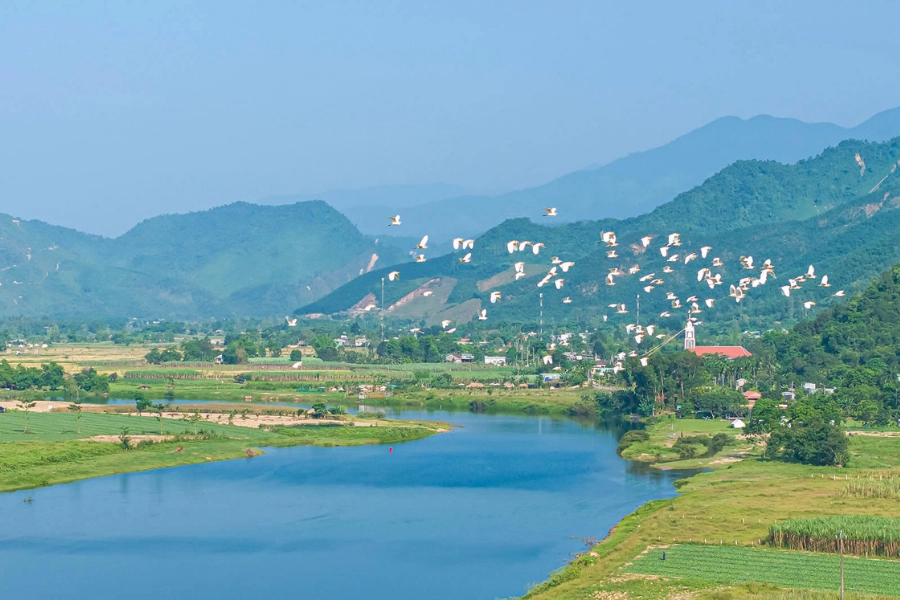
Step into the Hoa Bac Valley with My Danang Tours for a soul-stirring 2026 escape. Reconnect with the “Valley of Whispers,” where the mist-shrouded Cu De River meets ancient Co Tu wisdom. Experience the ultimate in regenerative travel and off-the-grid serenity; this isn’t just a trip, it’s a transformative journey into the beating heart of Vietnam.
Ancestral Eating Hoa Bac: A Journey from Forest to Fork
In 2026, the culinary landscape of the valley is defined by ancestral eating, Hoa Bac, a return to primitive, high-vibration cooking methods that prioritize the life force of the ingredients. This is the ultimate expression of farm-to-table Da Nang, where the distance between the soil and the plate is measured in footsteps rather than miles.
The Alchemy of Bamboo and Fire
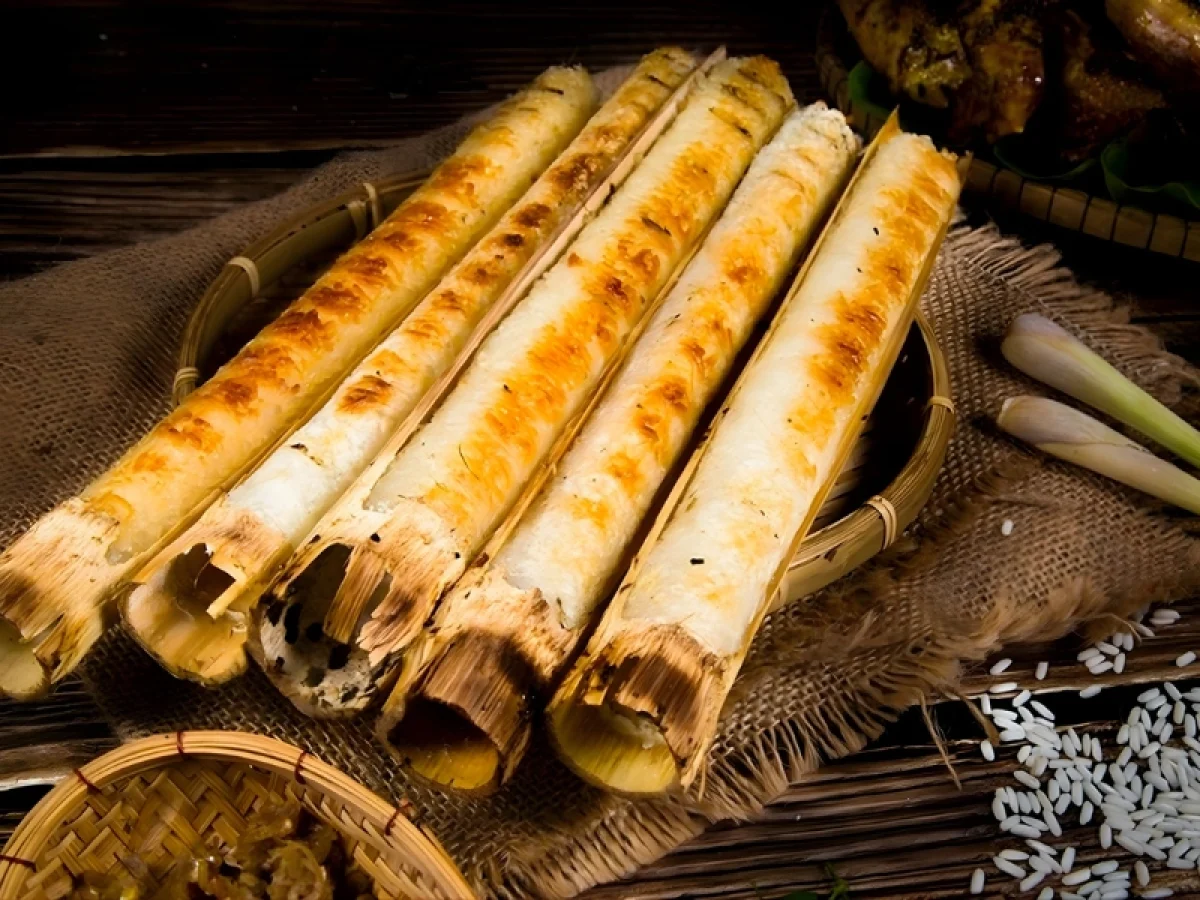
The heart of the Hoa Bac kitchen is the open flame. Traditional Co Tu techniques, such as Com Lam (sticky rice cooked in bamboo) and Zar (meat or fish fermented with local herbs in bamboo tubes), are not just recipes; they are ancestral rituals. In 2026, these methods have been refined for the conscious epicurean. Travelers can visit the Co Tu Community Kitchen in Nam Yen village to witness the forest-to-fork dining process. Here, stream fish caught from the Luong River are wrapped in wild banana leaves and grilled over embers of cinchon wood, infusing the flesh with a smoky, earthy aroma that no modern oven can replicate. The seasoning is never artificial; it relies on the “Spices of the Mist”—wild ginger, forest chili, and the pungent, citrusy bite of Mac Khen seeds.
Foraging for Health and Heritage
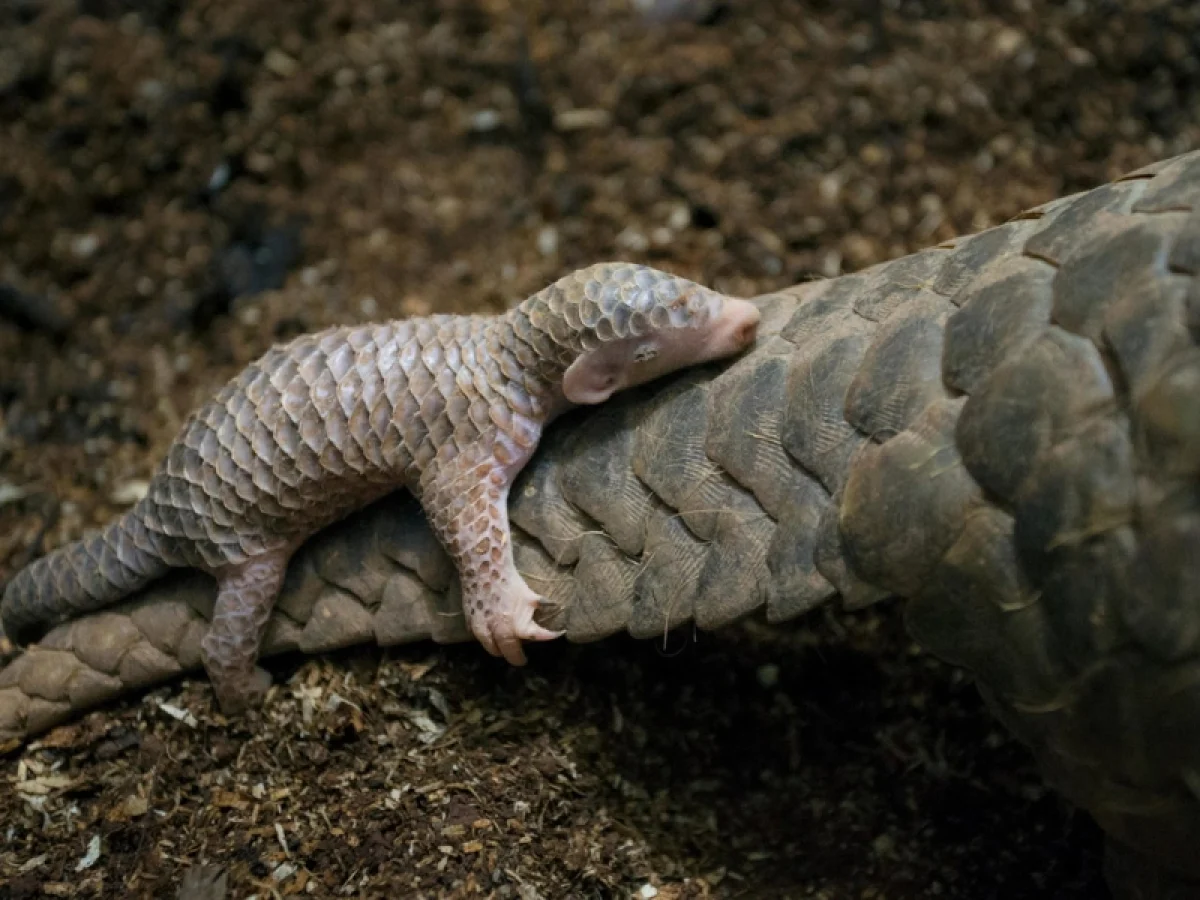
Guided by local elders, guests can participate in “Foraging Walks” to discover the rare flora and fauna Vietnam hides within its undergrowth. You will learn to identify La Nhi, a wild leaf with potent antioxidant properties—and various mountain roots used in traditional tonics. This form of authentic cultural immersion transforms a meal into a lesson in biodiversity. In 2026, the menu at any eco-conscious retreat in the valley is dictated by the mountain’s clock. If the monsoon has just passed, the table is heavy with wild mushrooms and bamboo shoots. If it is high summer, the focus shifts to cooling herbal broths and fermented forest fruits. Every bite is a celebration of the Hoa Bac Valley’s ecological wealth, proving that luxury in 2026 is found in the purity of the source.
The Soul of the Highlands: Immersive Co Tu Culture and Indigenous Wisdom
The Hoa Bac Valley is more than a landscape; it is a living museum of the Co Tu people. In 2026, the relationship between travelers and the indigenous community will have evolved into a partnership of mutual respect. This is the core of community-based tourism, where your visit directly supports the preservation of indigenous wisdom.
The Architect of the Spirit: The Gươl House
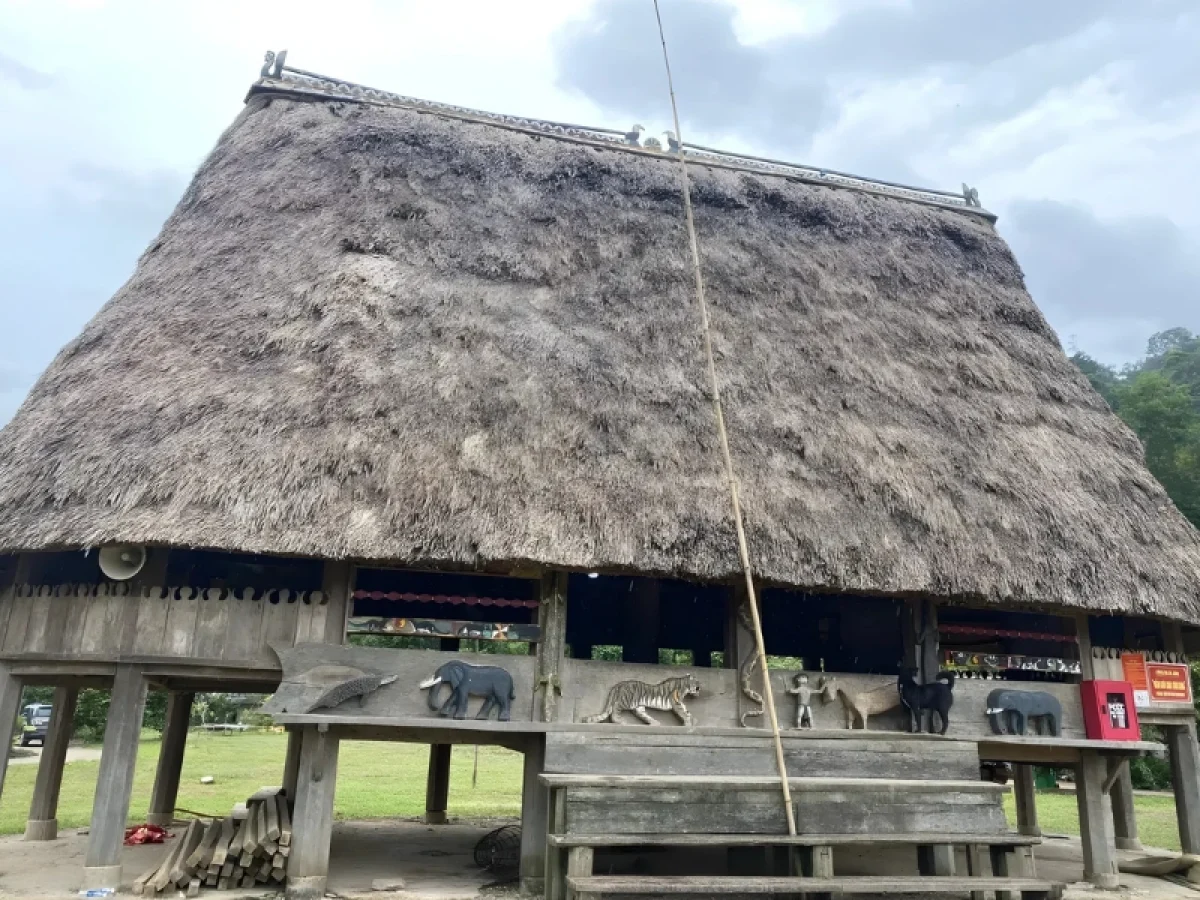
At the center of Nam Yen Village and Pho Nam Village, the “Gươl” house stands as the architectural heart and the spiritual anchor of the community. These communal structures, built on sturdy stilts and topped with thatched roofs that mimic the soaring shape of a phoenix’s wing, are symbols of collective strength and unity. In 2026, the restoration of these houses has become a point of pride for the youth of the valley.
As you step inside, the air is thick with the scent of aged timber and sacred woodsmoke. Visitors are invited to study the intricate carvings on the central pillars—motifs of the buffalo, the sun, the stylized dancing woman, and the ancestral spirits. Each carving is a chapter of Co Tu cosmogony, representing a time when humans and spirits shared the forest. Sitting on the hand-woven bamboo floors of a Gươl, listening to an elder recount the legends of the sacred mountain Da Nang, one experiences a state of Touching Serenity Da Nang that no five-star hotel could ever replicate. It is a space where the barrier between the modern world and the ancient world dissolves.
The Ritual of Vibration: The Tung Tung Ya Ya Dance
As dusk settles over the valley and the peaks of the Truong Son mountains turn into jagged silhouettes against the violet sky, the deep, resonant thrum of the Agool drum begins to vibrate through the earth. This signals the start of the Tung Tung Ya Ya dance, a mesmerizing ritual that depicts the eternal harmony between heaven, earth, and humanity.
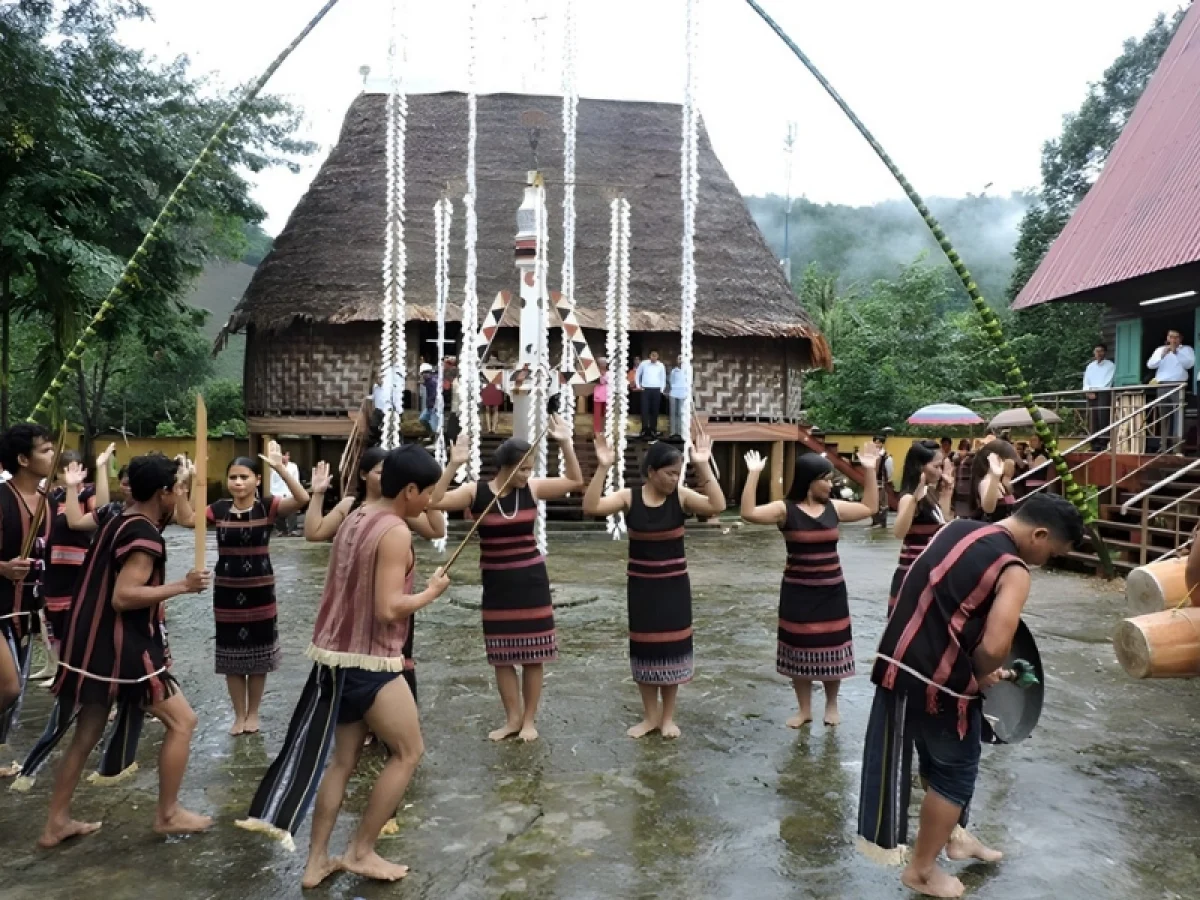
In 2026, this is not a staged performance for tourists; it is a genuine communal gathering. Travelers are often invited to join the outer circle, moving in slow, rhythmic steps that synchronize with the “Radiant Pulse” of the valley. The women (Ya Ya) move with an ethereal grace, their palms upturned to receive the spiritual blessings of the sky, while the men (Tung Tung) move with the grounded strength of the mountains, their spears pointing upward in a symbolic defense of their heritage. This encounter is the pinnacle of rural tourism in Vietnam, where the visitor is no longer a spectator but a participant in a living vibration that has endured for centuries.
Indigenous Wisdom as a Tool for Survival
What truly defines the Co Tu culture in 2026 is their “deep ecology” philosophy. Long before the term “regenerative travel Vietnam” was coined, the Co Tu practiced a form of forest management that treated every tree and stream as a sentient being. Travelers can engage with local guides to learn about “Taboo Forests”—sacred areas where no hunting or logging is permitted, ensuring the Son Tra Peninsula’s biodiversity and the valley’s ecosystems remain intact.
This indigenous wisdom extends to their calendar, which is dictated by the flowering of specific forest trees and the migration of birds. By learning to “read” the forest through the eyes of a Co Tu elder, visitors gain a new perspective on climate resilience and sustainable living. This authentic cultural immersion is a humble reminder that the solutions to our modern environmental crises often lie in the ancient traditions of those who have lived in harmony with the land since the beginning of time.
The Weaving of Time: Traditional Weaving Co Tu
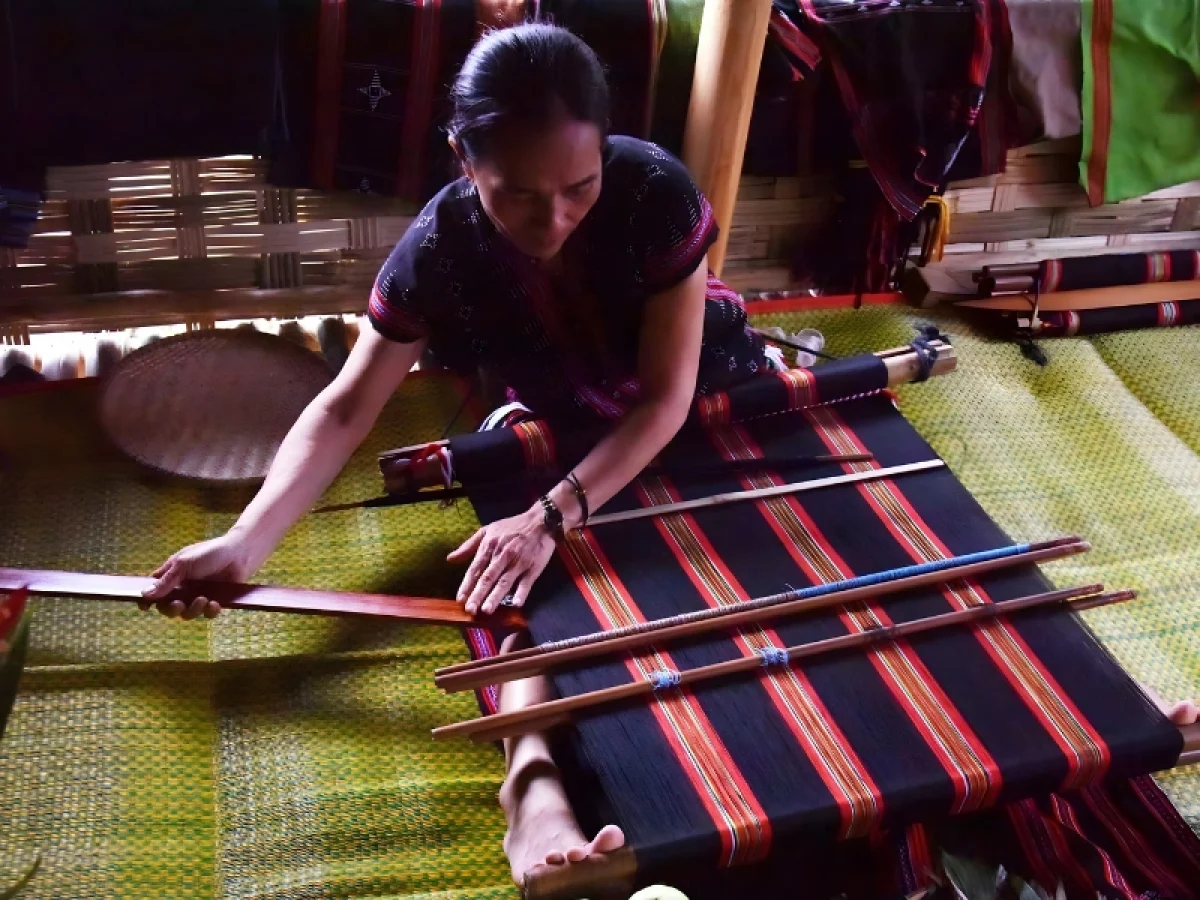
One of the most profound expressions of indigenous wisdom in the Hoa Bac Valley is the art of brocade weaving. In 2026, traditional Co Tu weaving has seen a massive resurgence as part of the regenerative travel Vietnam movement.
From Cotton Seed to Sacred Fabric
The process begins with the cultivation of local cotton and the extraction of dyes from forest plants—indigo for deep blues, turmeric for vibrant yellows, and bark for earthy reds. Travelers can spend a full day in a traditional Co Tu weaving workshop, sitting on the floor with master weavers who use back-strap looms to tension the threads. There is no blueprint; the patterns are stored in the weaver’s memory, passed down through generations. Each diamond, zigzag, and animal motif tells a story of the sacred mountain Da Nang. To own a piece of this fabric is to hold a physical fragment of the valley’s history. It is a slow, meditative process that perfectly encapsulates the slow travel Vietnam ethos.
The Flow of Ages: Deep Ecology of the Cu De and Luong Rivers
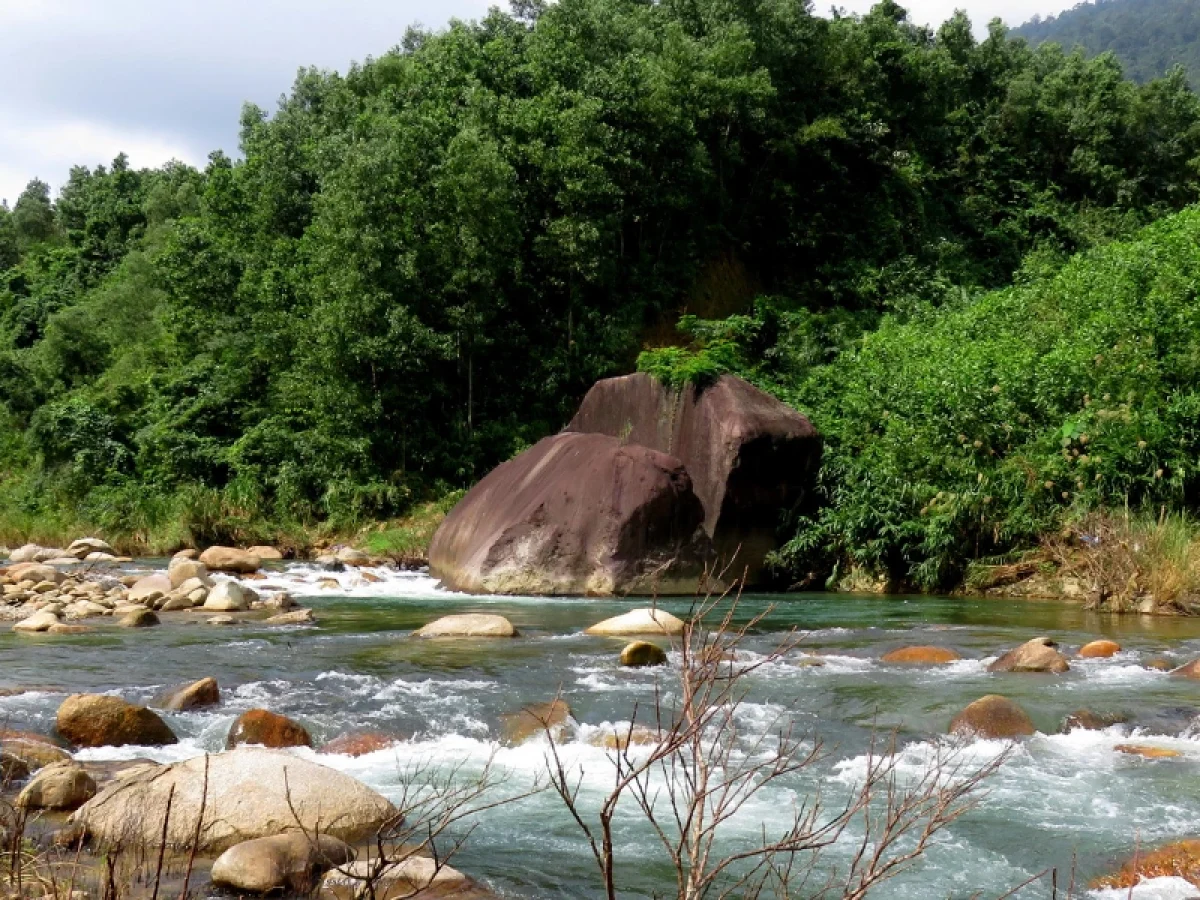
The Cu De River and its primary tributary, the Luong River, are the lifeblood of the valley. In 2026, these waterways are treated with the same reverence as a temple. They are the primary sites for zero-waste camping and water-based mindfulness.
The Guardian of the Water
The river’s health is meticulously managed by the local community through the Hoa Bac Valley Water Protection Initiative. Motorized boats are strictly prohibited in the upper reaches to prevent noise pollution and fuel leaks. Instead, visitors explore via “Silent Rowing” in handcrafted wooden canoes. As you glide over the crystal-clear water, you can see the riverbed’s smooth stones and the small schools of indigenous fish. This clarity is a direct result of organic agriculture Da Nang practices upstream, which prevent chemical runoff.
River Meditation and Blue Wellness
Early morning “river meditation” has become a signature of the eco-luxury retreat experience. Guests sit on the massive granite boulders that line the Luong River, practicing breathwork to the sound of the cascading water. The negative ions produced by the river’s movement are known to reduce stress and improve mental clarity, a natural therapy that defines the coolcation trend in Son Tra and Hoa Bac. This is regenerative travel in Vietnam at its most visceral, minimizing our footprint so that the river’s natural acoustic and biological ecology can flourish.
Sustainable Luxury: Glamping and Off-the-Grid Living in 2026
In 2026, the concept of ‘Luxury’ in Hoa Bac Valley is defined by space and silence. This evolution is a key pillar of the Da Nang 2026 ‘Touching the Original’ campaign, where sustainable glamping models combine high-end comfort with raw wilderness protection.
Yên Retreat and the Philosophy of Stillness
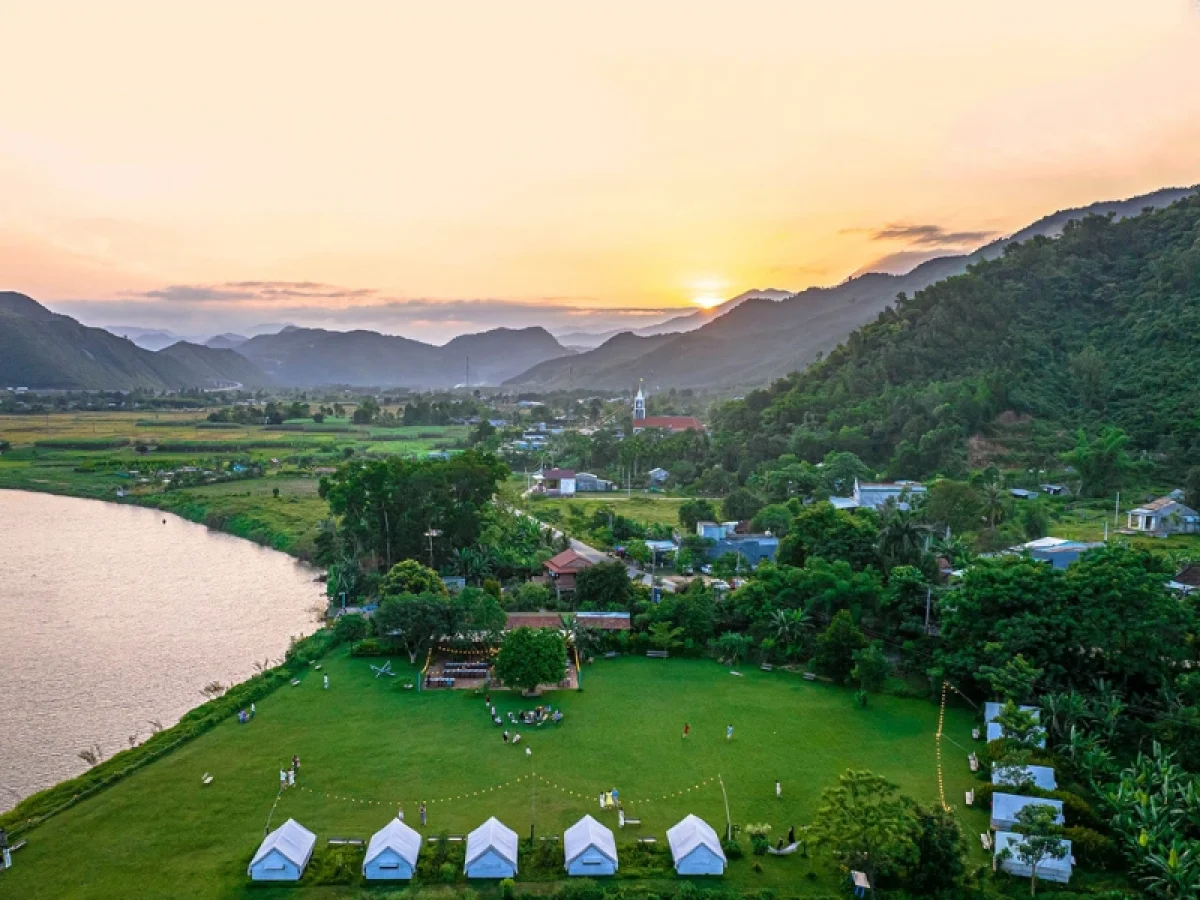
Located in Nam Yen village, Yên Retreat is the definitive sustainable glamping Da Nang experience. The tents are constructed from weather-resistant canvas and raised on wooden platforms to protect the soil. There are no televisions or high-speed Wi-Fi networks here; instead, the “entertainment” is provided by the stars. At night, the retreat enters a “Dark Sky Protocol” similar to the Son Tra Dark Sky Zone, reducing artificial light to zero so that the Milky Way is visible in its full glory.
The Rise of the Eco-Luxury Retreat
For those who prefer a solid structure, the eco-luxury retreat spots in Pho Nam village offer villas built into the hillside. These structures utilize geothermal cooling and greywater recycling systems, ensuring that your stay has a “net-positive” impact on the environment. This is off-the-grid Da Nang living at its finest, where you can enjoy a rain shower and a comfortable bed while knowing your presence is helping to fund the Son Tra reforestation project and the valley’s conservation efforts.
Mindful Agriculture: Organic Agriculture Da Nang and Forest-to-Fork
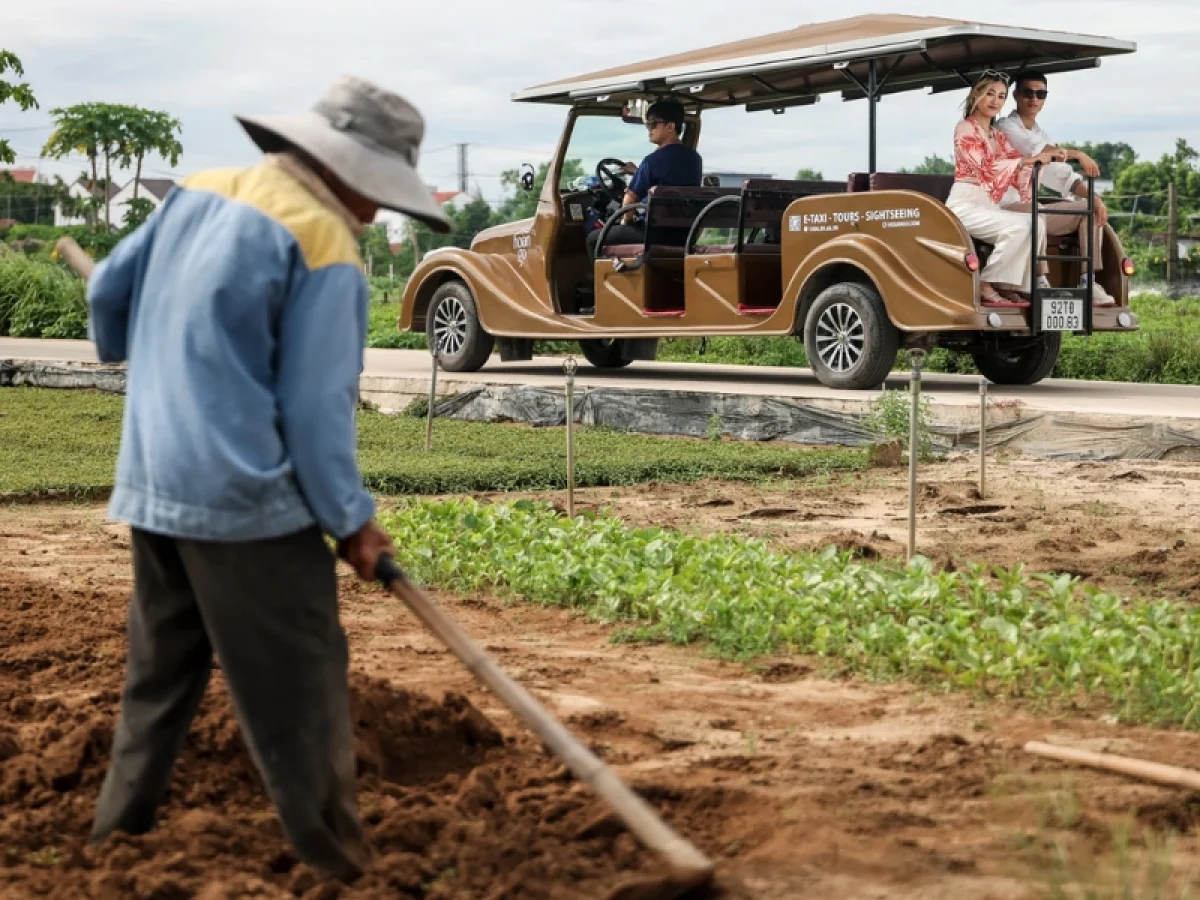
A significant portion of the valley’s landscape is dedicated to organic agriculture in Da Nang. In 2026, these fields are not just for production; they are educational spaces where travelers can learn about the synergy between traditional techniques and modern sustainability.
The Cycle of Life
Visitors are encouraged to spend a morning at a local farm, getting their hands in the soil to learn about the indigenous wisdom of crop rotation and natural pest control using fermented forest herbs. This hands-on involvement is a pillar of regenerative travel in Vietnam, as it fosters a deep respect for the labor that goes into every meal. The sweet corn, mountain rice, and heirloom vegetables that come from these fields are used to make the “forest-to-fork” dining experiences that can be found in the villages. This is slow travel Vietnam in its most productive form, where the traveler becomes a temporary “steward” of the land.
The Seasonal Rhythm: When to Visit Hoa Bac Valley
To understand the valley, one must understand its seasons. In 2026, travel is timed to the mountain’s clock.
- The Season of Awakening (February – April): The valley is at its greenest. The air is crisp, and the mountain flowers are in full bloom. This is the ideal time for mountain meditation and mindful trekking in Da Nang (which extends into the lower valley).
- The Season of the Sun (May – August): The coolcation Son Tra effect is strongest here. While the coast is hot, the valley remains temperate thanks to the “Forest Breathing” effect. This is the peak season for eco-friendly kayaking and river activities.
- The Season of the Mist (September – December): The clouds descend into the valley, creating a mystical, ethereal atmosphere. While trekking is more difficult, this is the best time for a digital detox by the fireplace in an eco-luxury retreat.
A Practical Guide: Planning Your Hoa Bac Escape
Navigating the Hoa Bac Valley requires a “Leave No Trace” mindset and a willingness to embrace the unexpected.
- Transportation: Reach the valley via electric shuttle or e-bike from Da Nang (approx. 45 mins). Within the valley, walking and cycling are the preferred methods to maintain sustainable tourism Da Nang standards.
- Timing: The best time for off-the-grid Da Nang living is between February and September. October to January brings the rainy season, which offers a beautiful, misty “Coolcation” vibe but can limit trekking.
- Cultural Conduct: Always ask permission before entering a Gươl house or taking photos of elders. When participating in ancestral eating in Hoa Bac, remember that food is considered a gift from the forest; waste is highly discouraged.
- Booking: Many eco-luxury retreat spots in 2026 require booking 2–4 weeks in advance due to strict daily visitor caps designed to protect the Hoa Bac Valley’s integrity.
Frequently Asked Questions About Hoa Bac Valley
- Is there internet or mobile signal in Hoa Bac?
Most sustainable glamping Da Nang sites intentionally offer limited Wi-Fi to encourage a digital detox. Mobile signal is available but intermittent, which is part of the off-the-grid Da Nang charm.
- Can I visit the Co Tu villages without a guide?
You can walk through the public areas of Nam Yen and Pho Nam, but for an authentic cultural immersion—such as entering homes or participating in rituals—local conservationist guides are required.
- What should I wear for a Hoa Bac retreat?
Lightweight, breathable fabrics for the day and a light jacket for the cooler evening mountain air. If you plan on mindful trekking in Da Nang, sturdy, waterproof footwear is essential.
- Is the food at the Co Tu kitchen spicy?
The spice level is moderate, focusing more on the aromatic flavors of ginger, galangal, and forest peppers. Chefs can easily adjust the heat to your preference.
The Wisdom of the Valley
As you leave the Hoa Bac Valley and cross back over the bridge toward the modern skyline of Da Nang, something stays with you. It is the realization that the most sophisticated form of luxury in 2026 is the ability to be truly present. The valley doesn’t just offer a holiday; it offers a recalibration of the soul.
By choosing regenerative travel in Vietnam, you have contributed to the survival of a culture and an ecosystem that refuses to be forgotten. The ancestral eating of Hoa Bac, the rhythmic drums of the Co Tu, and the silent flow of the Luong River are reminders that we are all part of a larger, ancient story. In the “Valley of Whispers,” the most important thing you hear is the sound of your own heart beating in time with the earth.

Comment (0)