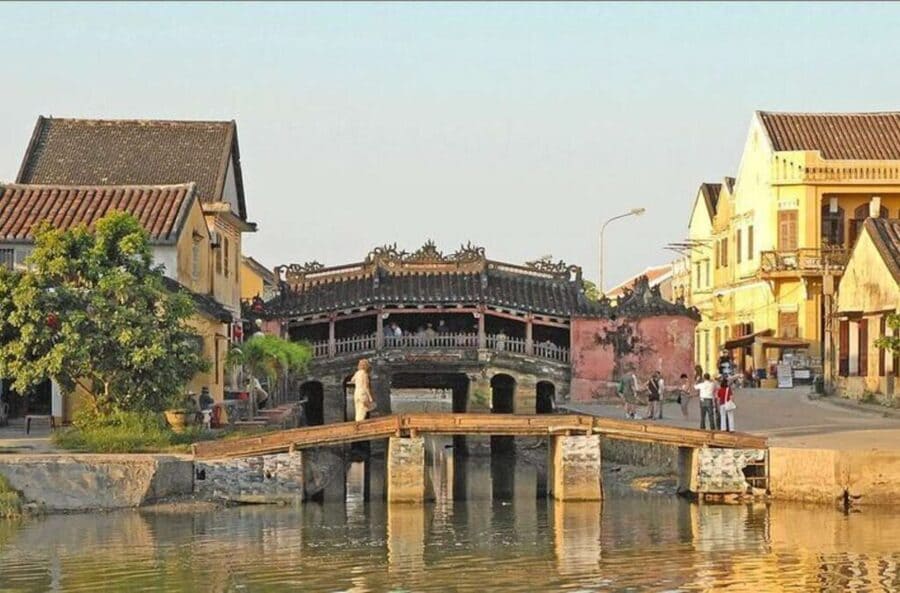
Wandering through the sun-baked, mustard-yellow streets and lantern – illuminated alleyways of Hoi An Ancient Town, it is incredibly easy to feel as though you have stepped out of the frenetic modern world and into a meticulously preserved, living museum. Unlike many modern tourist destinations that merely attempt to replicate the aesthetics of the past for visual appeal, this coastal Vietnamese gem allows visitors to physically walk through a rich tapestry of history that has somehow survived the relentless test of time, wars, and weather—an experience often highlighted by Da Nang Tours.
At the very heart of this deeply immersive experience is Hoi An’s architecture. This is not just a uniform style of building; it is a tangible, physical record of an era defined by bustling international maritime trade, profound cultural exchange, and remarkable human adaptability. The town’s captivating aesthetic—the weathered wooden facades, the gracefully sloping tiled roofs, the moss-covered walls, and the intricate carvings—is not merely a happy accident of geography. Rather, the defining characteristic of Hoi An architecture is that it is a deliberate, centuries-old fusion of distinct design principles.
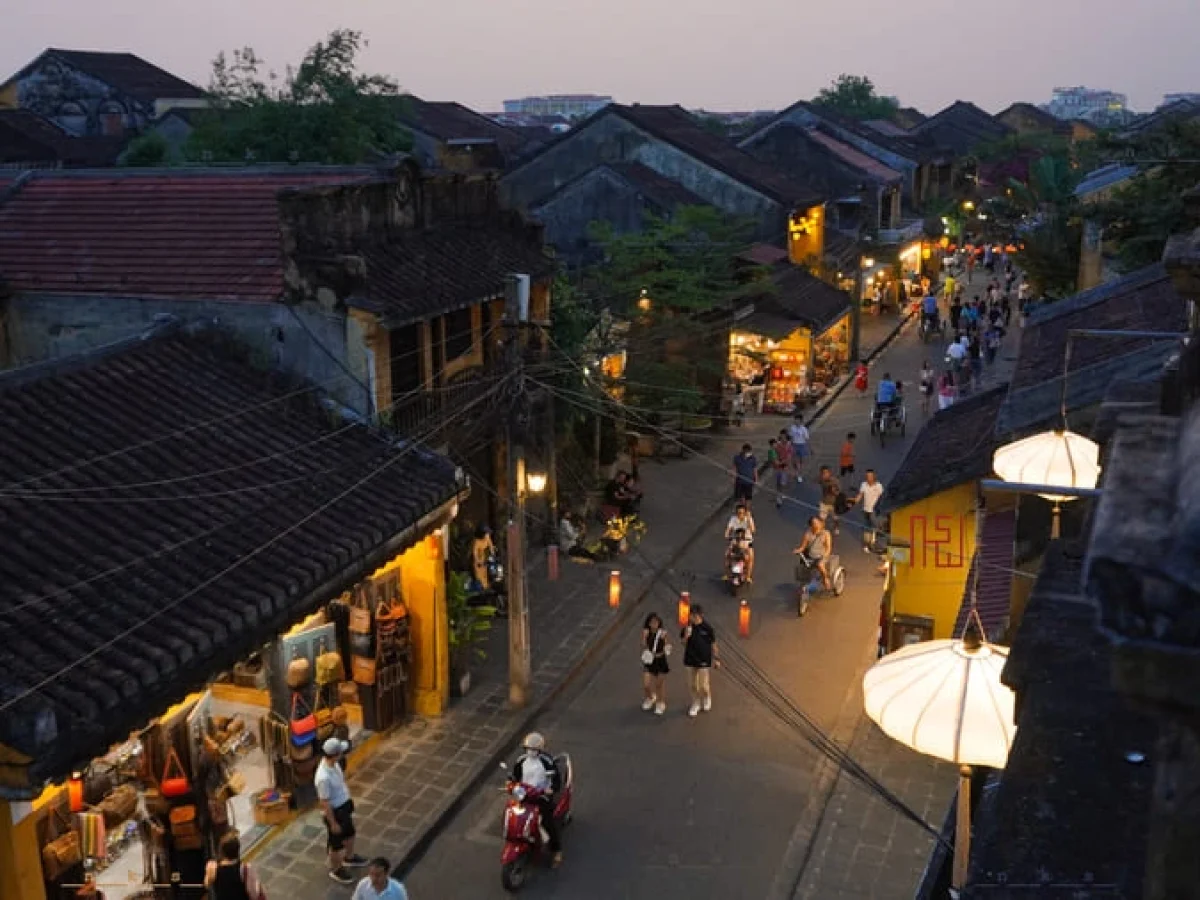
As foreign merchants from across the globe arrived and eventually settled along the muddy banks of the Thu Bon River, they brought with them the structural hallmarks and engineering traditions of their respective homelands. The breathtaking result is an architectural landscape that perfectly intertwines Japanese precision, Chinese ornate spirituality, and the unparalleled environmental adaptability of traditional Vietnamese architecture.
To truly understand the allure of this town, we must dive deep into the evolution of Hoi An architecture and uncover the fascinating stories hidden within its ancient, timeworn walls. This is a story of how wood, clay, and stone were shaped by the winds of global trade to create an aesthetic found nowhere else on earth.
Unpacking Hoi An History – The Context of a Bustling Trading Port
To fully appreciate the magnificent nuances of Hoi An architecture, one must first look back at the expansive timeline of Hoi An’s history. Long before the first European galleons or Japanese merchant ships arrived, this area was a crucial port for the ancient Champa Kingdom, known as Lam Ap Pho. The Cham people were master seafarers and traders who established early trade networks across the seas.

However, the golden age of Hoi An’s history, which dictated the town’s current physical layout, spanned roughly from the 15th to the late 19th centuries. During this era, this small settlement (then known to Western traders as Faifo) blossomed into one of Southeast Asia’s most vital and lucrative trading hubs. It became an essential stop on the maritime silk and spice roads.
The local Nguyen Lords actively encouraged foreign trade, transforming the town into a cosmopolitan center where merchant ships from Japan, China, India, Portugal, and the Netherlands converged. They came to trade high-value commodities like premium local silk, delicate porcelain, aromatic pepper, cinnamon, and medicinal herbs. This immense wealth laid the economic groundwork necessary to build the grand structures that define Hoi An architecture today.
The Monsoon Factor and Architectural Assimilation
But why did these transient foreign traders leave such a permanent, indelible mark on Hoi An architecture? The answer lies in meteorology—specifically, the seasonal monsoon winds. In the days of sail-powered maritime trade, merchants were entirely at the mercy of the weather. The prevailing trade winds dictated that foreign merchants arriving in Central Vietnam would often have to wait several months for the winds to shift direction before they could safely set sail back to their home ports.
Because of these prolonged, forced layovers, merchants could not simply live on their ships. They began to lease land, establish permanent settlements, build large storehouses for their goods, and eventually, construct grand, permanent residences. Over generations, many of these temporary expatriates settled down completely, marrying local Vietnamese women and deeply integrating themselves into the fabric of the community.
Consequently, the Hoi An architecture we see today was born out of this beautiful, necessary assimilation. The buildings were constructed to serve the functional needs of international merchants while simultaneously paying homage to the aesthetic traditions of their ancestors. The very layout of the streets, running parallel to the river to maximize waterfront access for loading cargo, is a direct result of this trade-driven lifestyle.
The Global Recognition of Hoi An Architecture as a UNESCO World Heritage Site
By the late 19th century, the landscape of global trade began to change. The Thu Bon River, which had been the lifeblood of the town, began to silt up heavily, making it entirely impassable for the larger, modern steamships that were revolutionizing maritime transport. Trade rapidly shifted to the nearby deeper port of Da Nang.
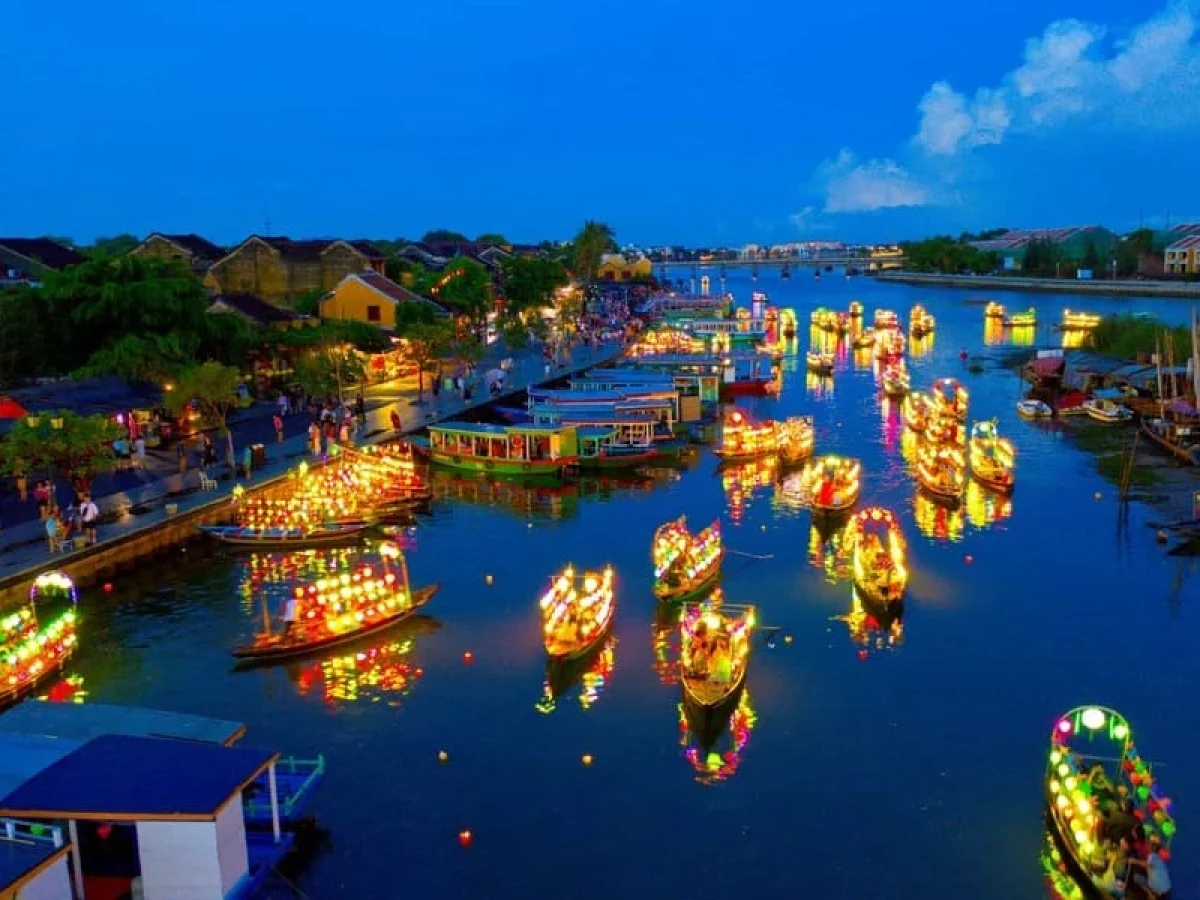
While this sudden economic shift was devastating for the town’s merchants at the time, plunging the once-wealthy port into a quiet slumber, it was a miraculous stroke of luck for the preservation of Hoi An architecture. Left economically dormant, the town escaped the rampant modernization, bulldozing, and concrete development that systematically erased the historical centers of so many other Asian cities during the rapid growth of the 20th century.
Recognizing its unbelievable state of preservation and its immense historical value as an exceptionally well-preserved example of a traditional Asian trading port, the town was officially designated as a UNESCO World Heritage site in 1999. The designation explicitly recognized Hoi An architecture for reflecting a fusion of indigenous and foreign cultures. This prestigious global title has been vital in protecting the authenticity of Hoi An architecture, ensuring that strict conservation laws prevent the destruction of this invaluable piece of Vietnam cultural heritage. Homeowners are now stewards of history, bound by regulations that ensure the town’s visual poetry remains intact for future generations.
The Japanese Imprint on Hoi An Architecture: Beyond the Japanese Covered Bridge
In the late 16th and early 17th centuries, the Japanese merchant community in this port town was incredibly wealthy, highly organized, and politically influential. They were granted official permission by the local Nguyen Lords to establish their own distinct residential and commercial quarter. Although Japan’s subsequent isolationist policies eventually led to the decline of this specific community, their structural legacy remains a vital pillar of Hoi An architecture.
The most famous and enduring legacy of this community is undeniably the Japanese Covered Bridge (known locally as Chùa Cầu). Built in the 1590s, the Japanese Covered Bridge was originally constructed to physically and symbolically link the Japanese quarter with the neighboring Chinese neighborhoods across a small, muddy waterway that flowed into the main river. Today, it stands as the ultimate, universally recognized emblem of Hoi An architecture.
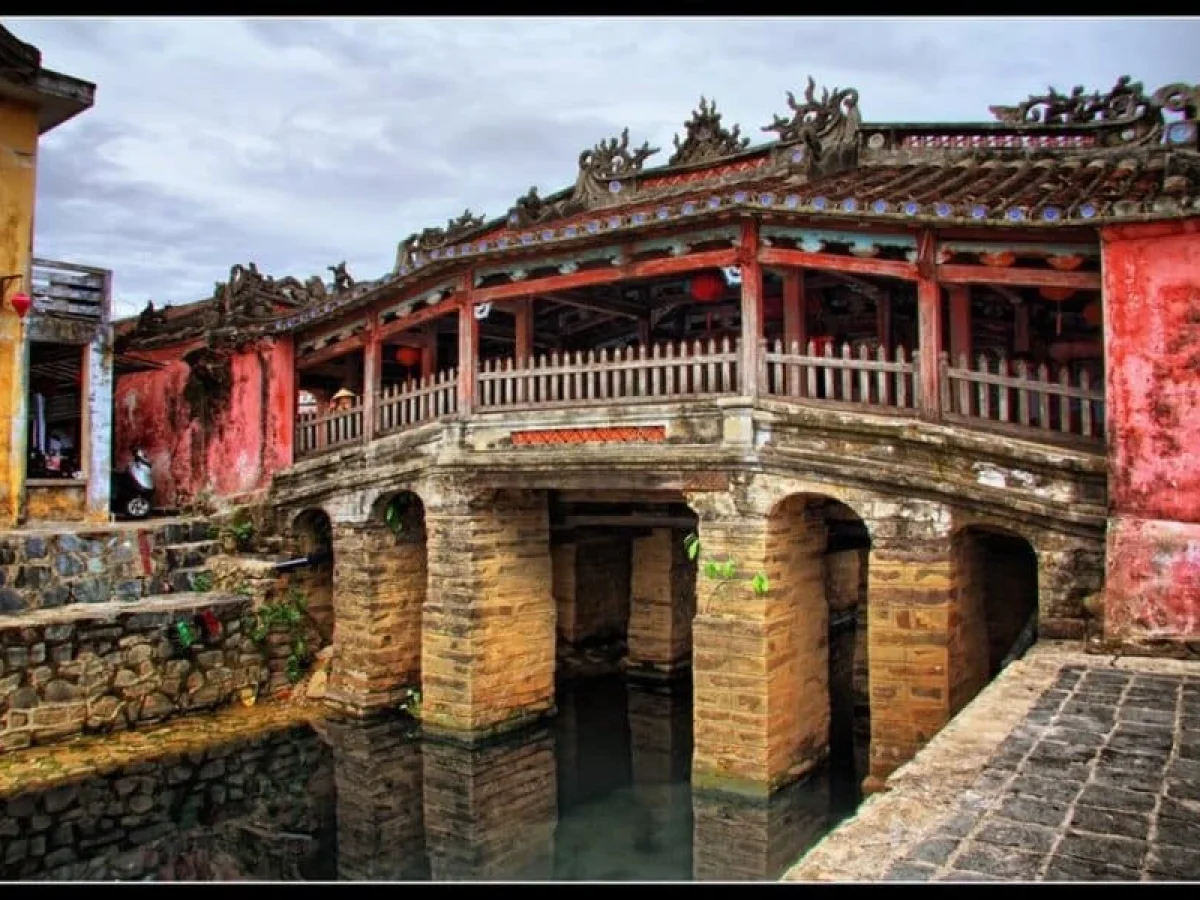
When you look closely at the Japanese Covered Bridge, the architectural ingenuity is astounding. According to local legend, the bridge was built to subdue the Namazu, a mythical subterranean monster whose thrashing was believed to cause earthquakes in Japan and floods in Vietnam. The bridge was supposedly placed directly over the monster’s weak point.
From a structural standpoint, the bridge features a remarkably soft, gentle curvature to its roof, which is densely lined with traditional clay tiles. The foundation and structural frame are built using a complex system of wooden pillars and tight mortise-and-tenon joints, completely devoid of metal nails. This specific design in Hoi An architecture was heavily influenced by Japanese seismic engineering, making the structure flexible enough to withstand the region’s frequent minor tremors and the punishing annual river floods.
Furthermore, the Japanese Covered Bridge exemplifies a highly unique “house above, bridge below” (thượng gia hạ kiều) design. It seamlessly incorporates a small, intricately carved shrine dedicated to Tran Vo Bac De, the Taoist god of weather, to protect the sailors from devastating typhoons. The integration of a sacred, religious space directly within a highly functional, daily transit structure is a profound hallmark of the thoughtful nature of early Hoi An architecture.
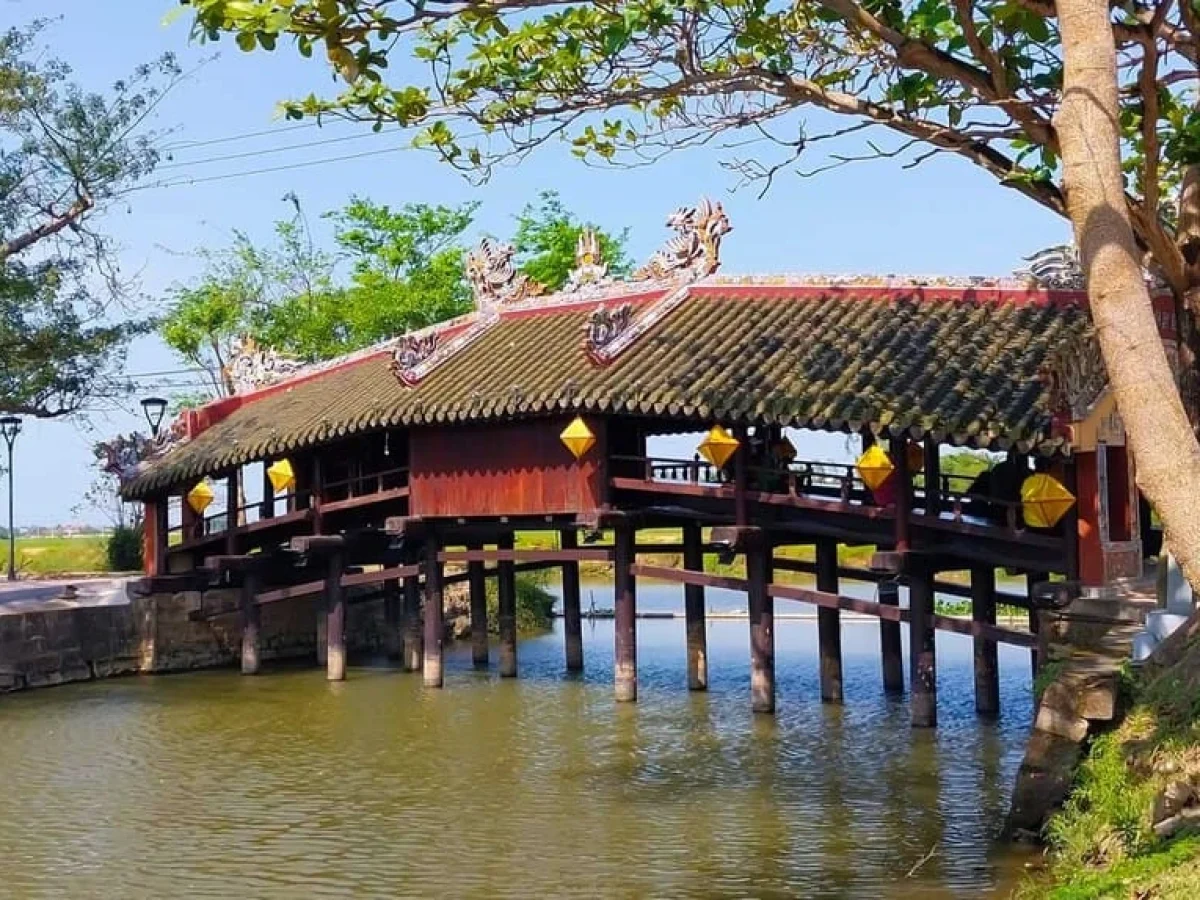
Chinese Assembly Halls: The Spiritual and Social Centers of Hoi An Ancient Town
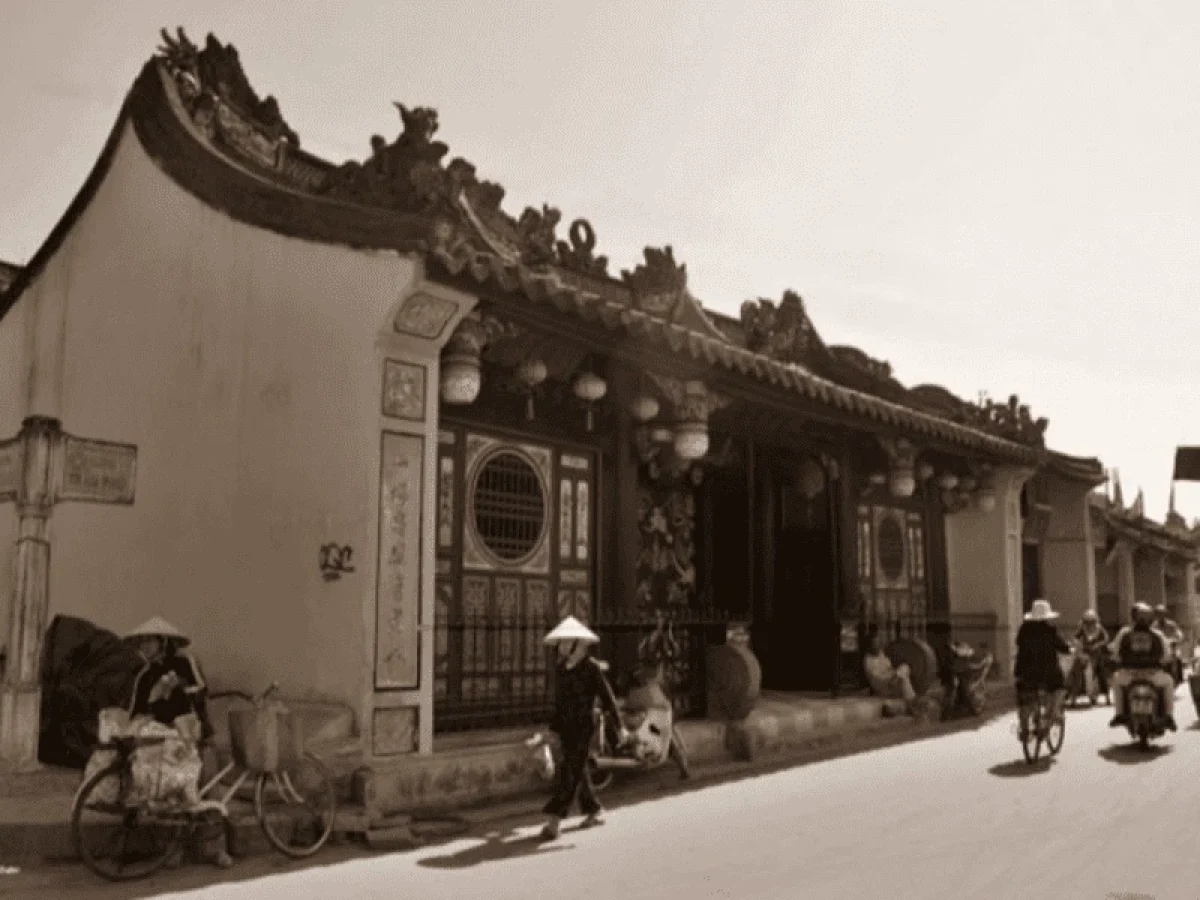
Following the decline of Japanese trade in the 1630s, Chinese merchants rapidly became the dominant economic, cultural, and political force in the region. Arriving primarily from the southern coastal provinces of China, they formed distinct, highly organized congregations based on their specific home regions. To support their communities, they pooled their immense wealth to build magnificent Chinese Assembly Halls.
These Chinese Assembly Halls served a vital dual purpose in the ancient port. First, they were bustling community centers for socializing, striking complex business deals, resolving disputes, and providing financial or housing assistance to new immigrants arriving from the mainland. Second, they were deeply spiritual temples dedicated to protective deities, most notably Thien Hau, the revered goddess of the sea who safeguarded sailors on their perilous journeys across the South China Sea.
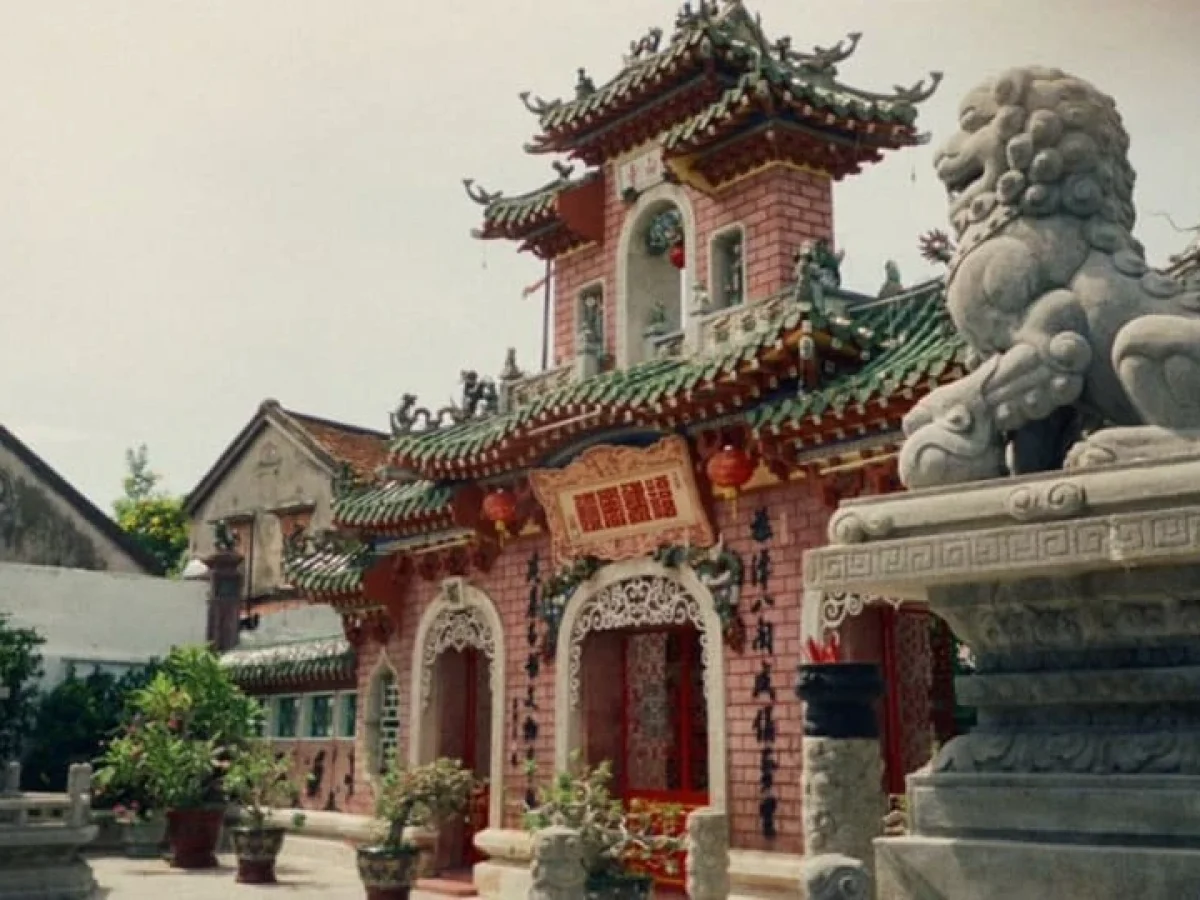
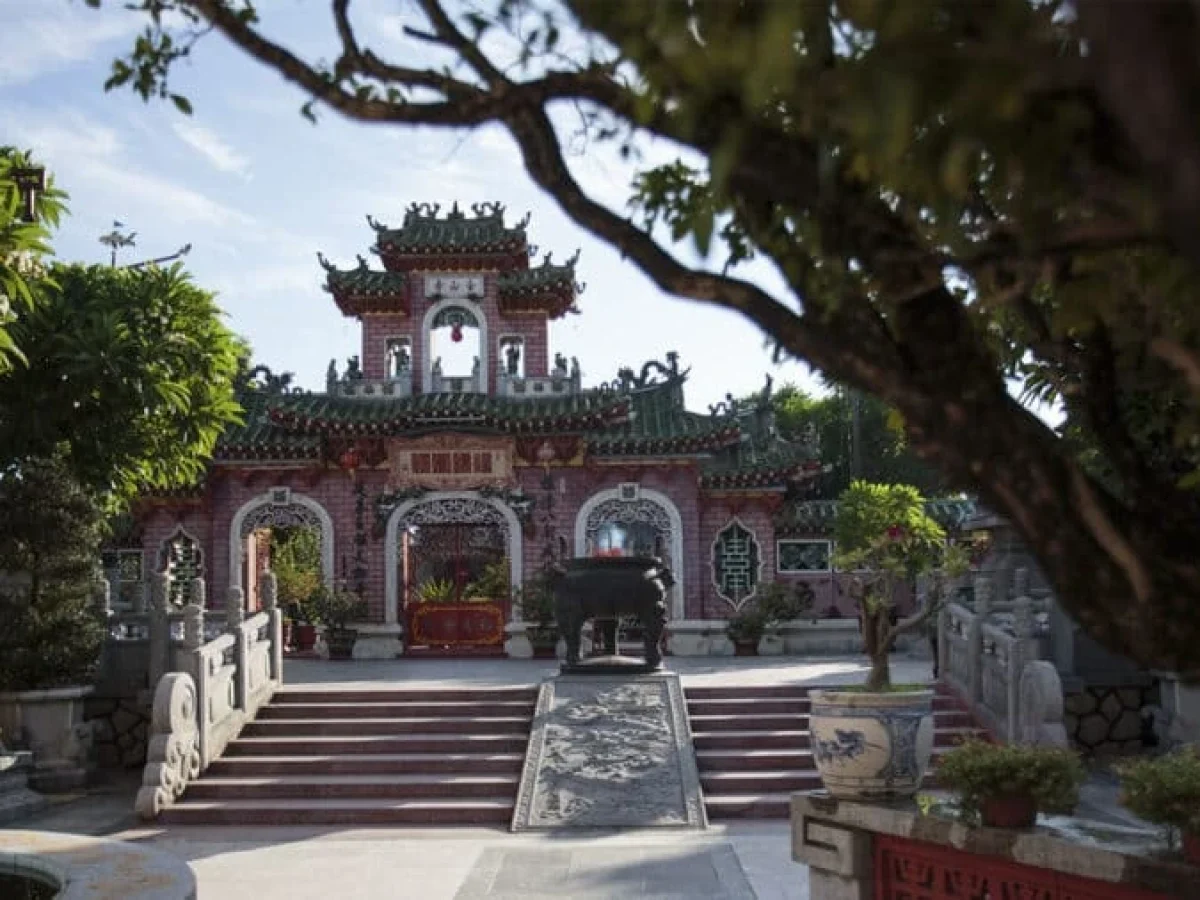
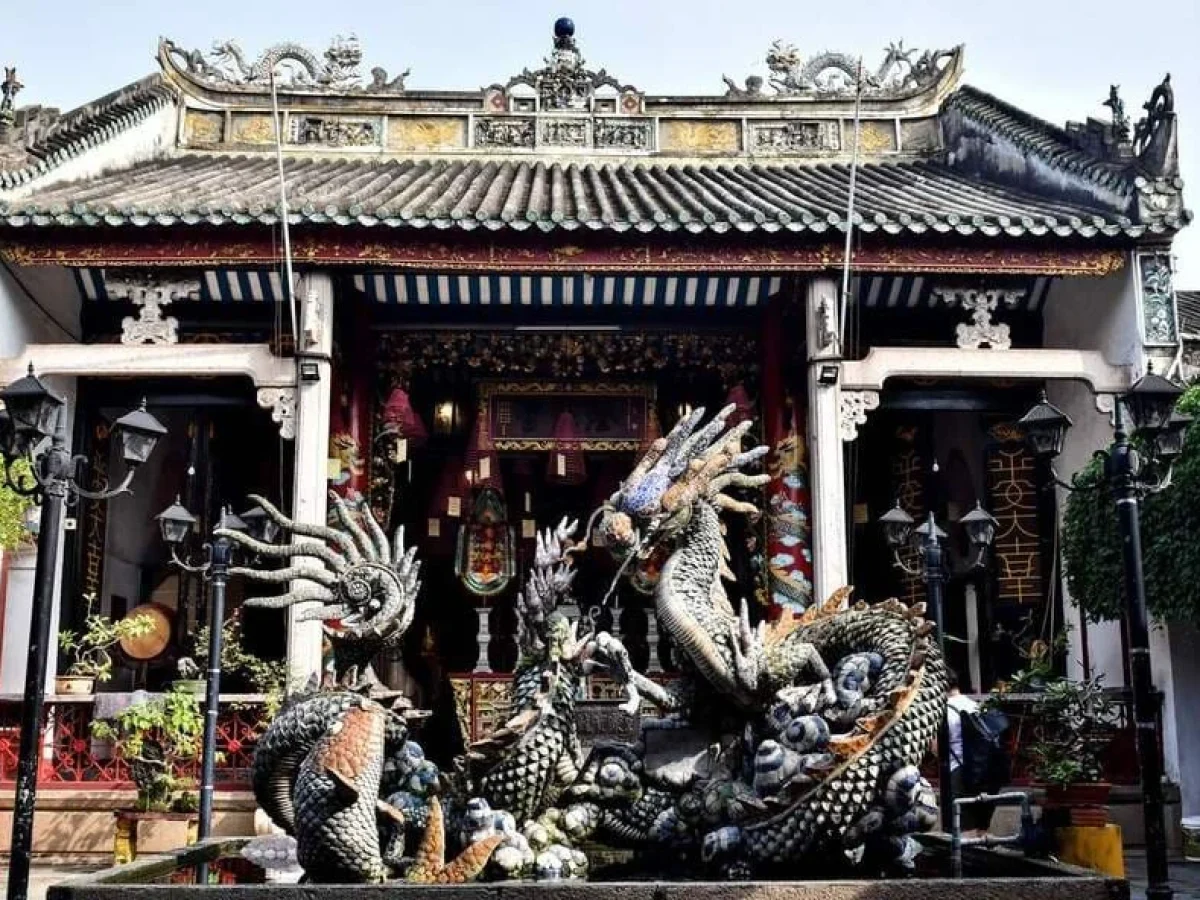
The influence of these halls on the broader scope of Hoi An architecture cannot be overstated. They introduced a level of breathtaking grandeur, vivid color, and vibrant ornamentation that contrasted sharply with the more subdued, minimalist Japanese styles and the highly functional Vietnamese structures. Key design details of these halls that heavily influenced Hoi An architecture include:
- The Tam Quan (Triple Gates): These are elaborate, towering entrance gates meant to signify the profound transition from the chaotic, secular world of commerce into the serene, sacred space of the temple. They are often topped with sweeping roofs and intricate masonry.
- Expansive Courtyards: Unlike the narrow residential houses, the assembly halls feature large, open-air courtyards. These spaces are carefully designed with ornamental bonsai plants, tranquil water features, and massive bronze incense urns. They were built specifically to manage the flow of massive crowds during important religious festivals and lunar new year celebrations.
- Glazed Tubular Tiles: In stark contrast to the simple, matte clay tiles found on the roofs of standard residential homes, Chinese Assembly Halls often feature brightly colored, highly glazed tubular roof tiles, usually in vibrant shades of emerald green or golden yellow.
- Intricate Mosaics and Wood Carvings: The rooftops, altars, and main structural pillars are heavily decorated with stunning, painstakingly crafted porcelain mosaics and deep wood carvings. These artworks depict powerful mythical creatures like soaring dragons, graceful unicorns, sturdy turtles, and elegant phoenixes, representing universal concepts of power, longevity, nobility, and prosperity.
Walking through the Phuc Kien (Fujian) Assembly Hall or the Quang Dong (Cantonese) Assembly Hall offers a masterclass in how imported religious and social infrastructure permanently altered the visual identity of Hoi An architecture.
The Solid Foundation: Traditional Vietnamese Architecture in Hoi An
While foreign influences provided the decorative flair, the spatial organization, and the grand monuments, the absolute bedrock of Hoi An architecture is undeniably traditional Vietnamese architecture. The local Vietnamese builders possessed centuries of hard-won, generational knowledge regarding how to construct buildings that could survive the uniquely punishing Central Vietnamese climate.
Traditional Vietnamese architecture provided the essential structural base for almost all civil and residential constructions in the town. When foreign merchants hired local craftsmen to build their homes, these local techniques were naturally integrated into the designs. The primary concern for local builders was not just aesthetic beauty, but survival. They had to adapt to the harsh realities of sweltering tropical heat, staggering humidity, relentless monsoon downpours, and the devastating, predictable annual floods.
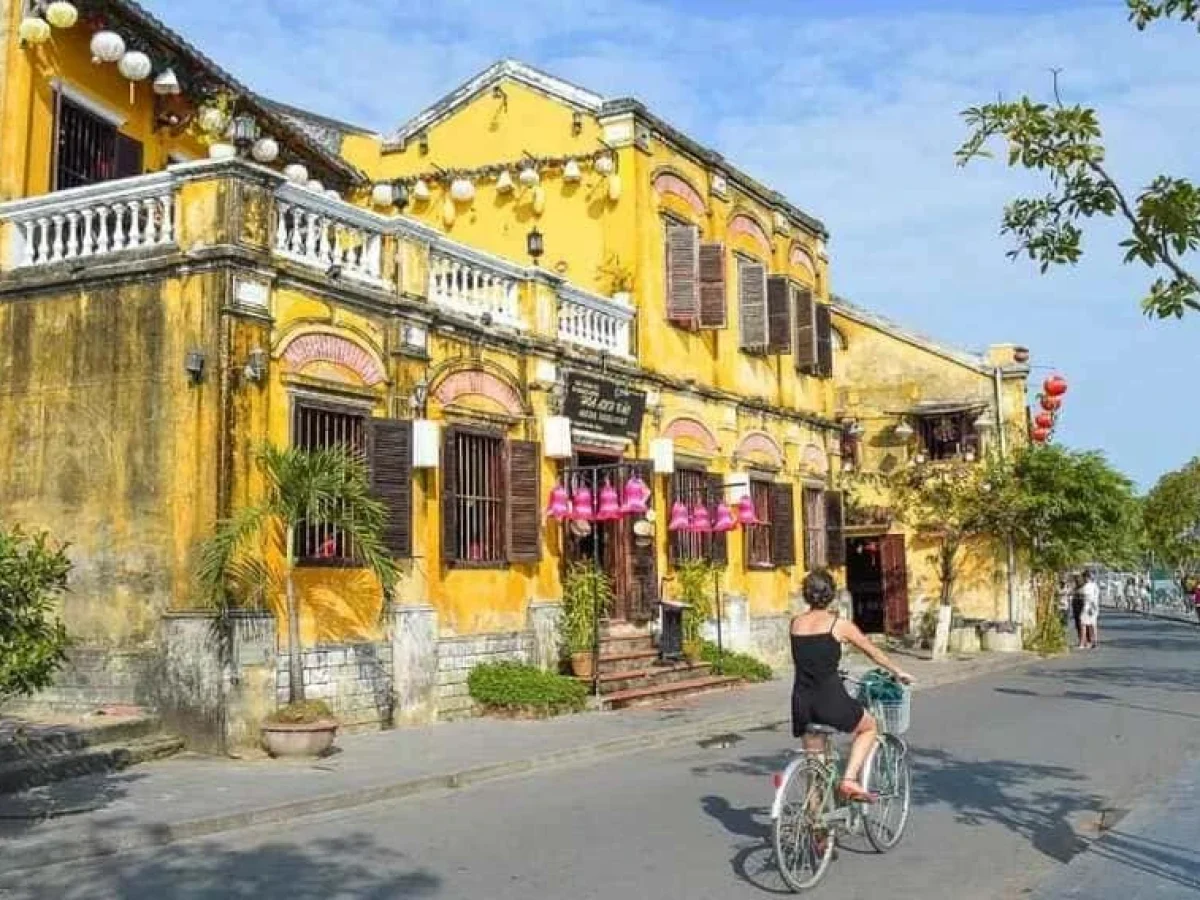
One of the most critical elements borrowed directly from traditional Vietnamese architecture is the highly effective roofing system. The vast majority of Hoi An architecture relies heavily on the yin-yang roof tiling technique. In this ingenious method, rows of concave and convex baked clay tiles are laid down in tightly alternating patterns, entirely without mortar.
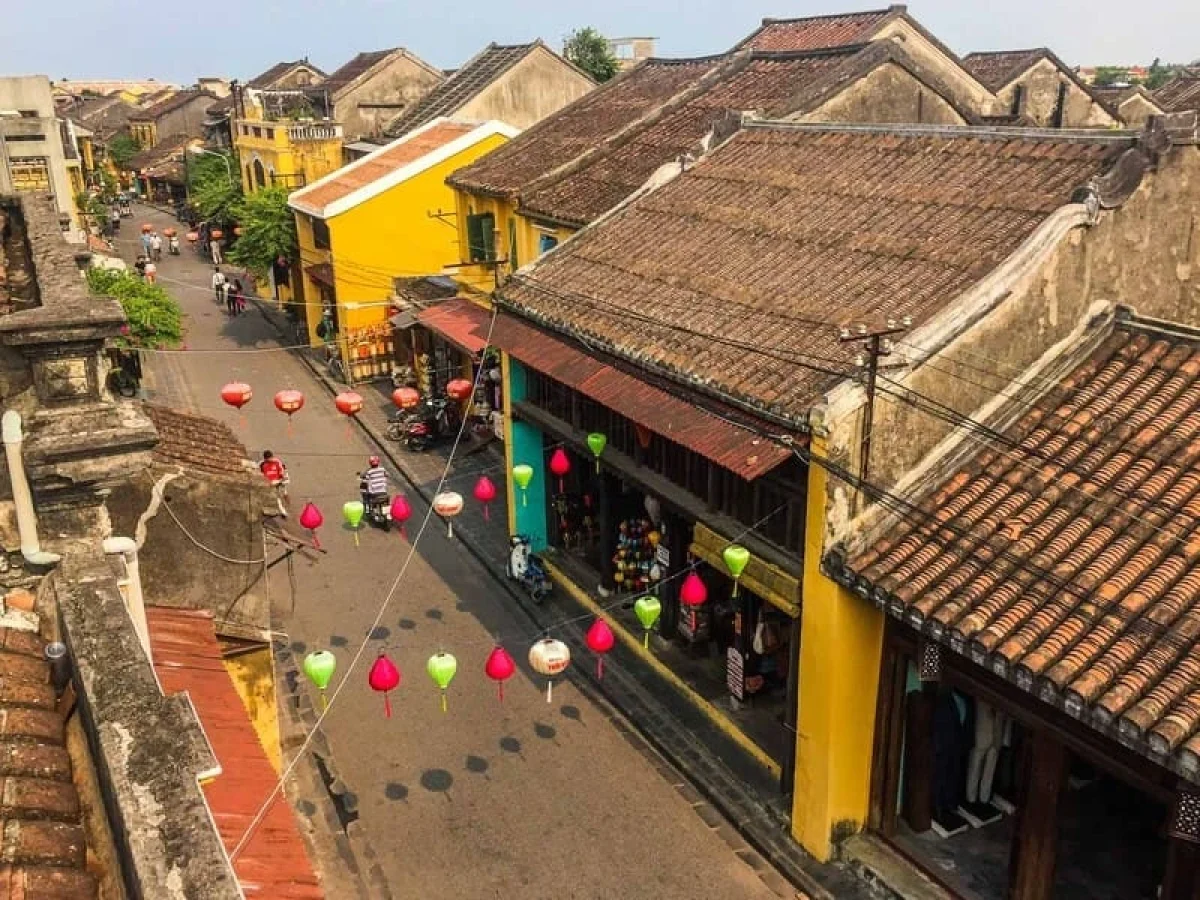
This specific tiling method is not just for visual texture; it is an incredible, ancient feat of passive climate control. The subtle gaps between the alternating rows of tiles allow trapped hot air to escape from the roof space, effectively pulling cool air through the house and keeping the interior surprisingly cool during the blistering summer months. Conversely, the thick layer of overlapping clay provides a dense insulating layer that retains precious warmth during the damp, chilly winter season. Furthermore, the structural framework supporting these roofs in traditional Vietnamese architecture relies on heavy, durable native woods like ironwood and jackfruit wood, utilizing complex wooden joinery that can shift and flex without snapping during extreme weather events.
Exploring the Interior Space of Hoi An Ancient Houses and Historic Merchant Houses
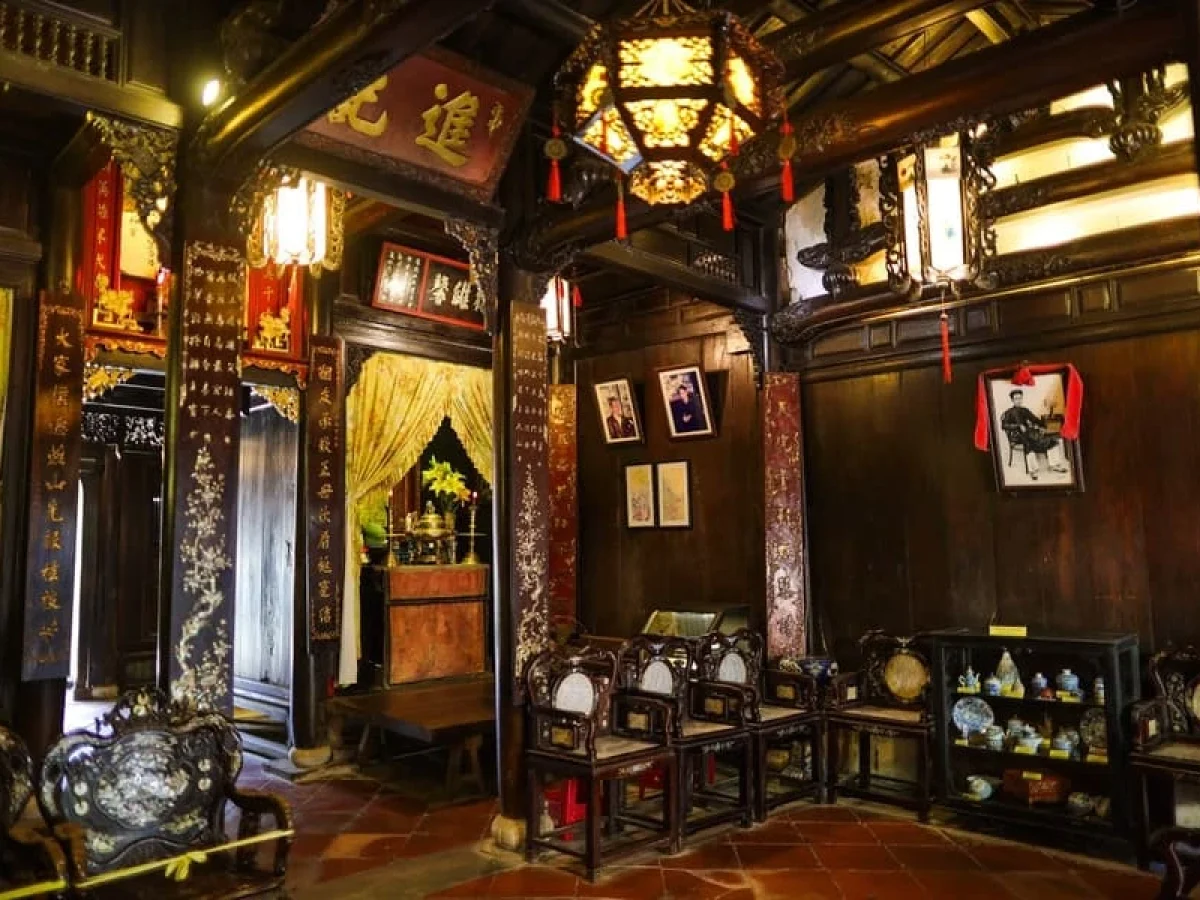
To truly comprehend the magic and the functional genius of Hoi An architecture, admiring the picturesque, street-facing facades is simply not enough. You must step over the high wooden thresholds and explore the interior spaces of the Hoi An ancient houses. These historic merchant houses—such as the famous Tan Ky House, the meticulously preserved Phung Hung House, and the historically rich Duc An House—are the clearest, most intimate, and most impressive manifestations of this multicultural combination.
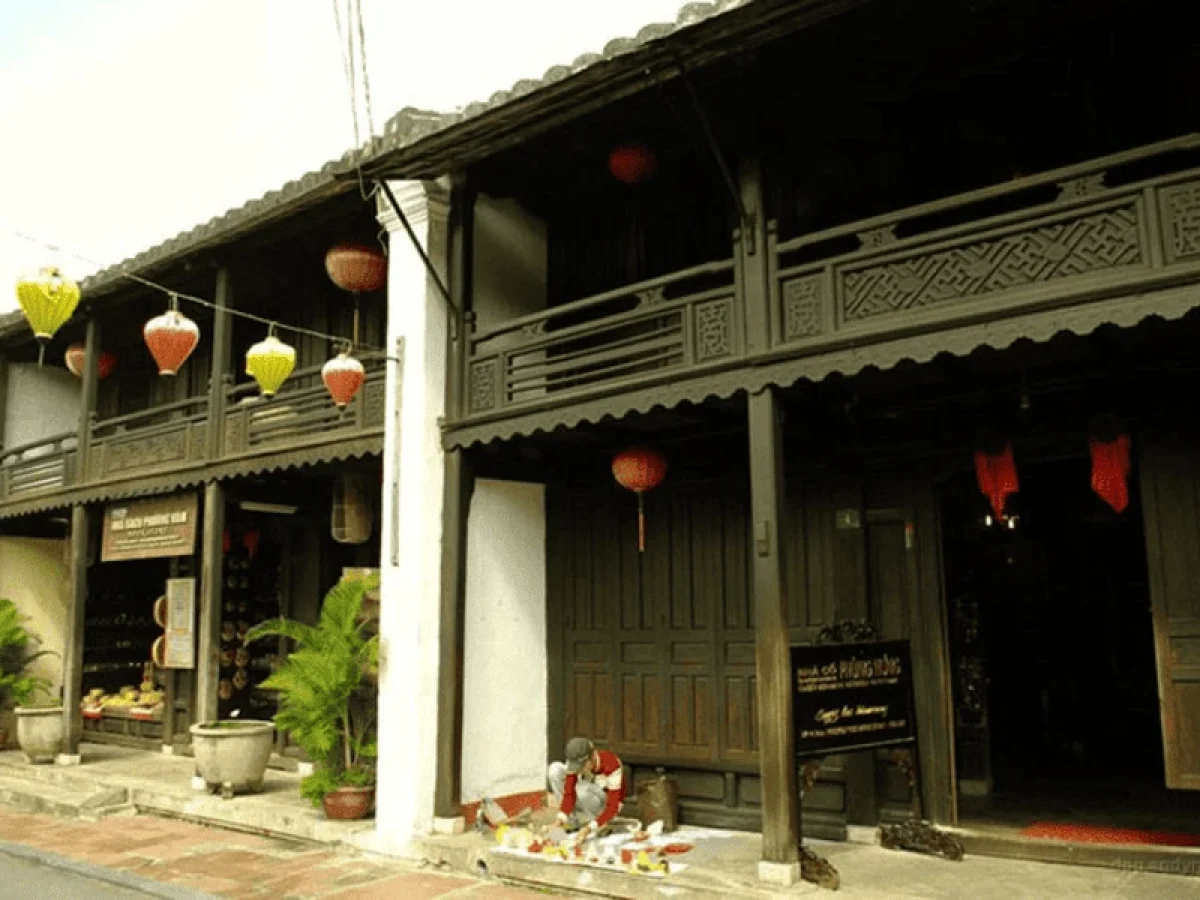
Many of these Hoi An ancient houses are incredibly unique because they have been continuously inhabited by the exact same families for seven or even eight generations. They are not staged, lifeless museums filled with replicas; they are living, breathing testaments to a bygone era of global commerce, maintained by the descendants of the original traders.
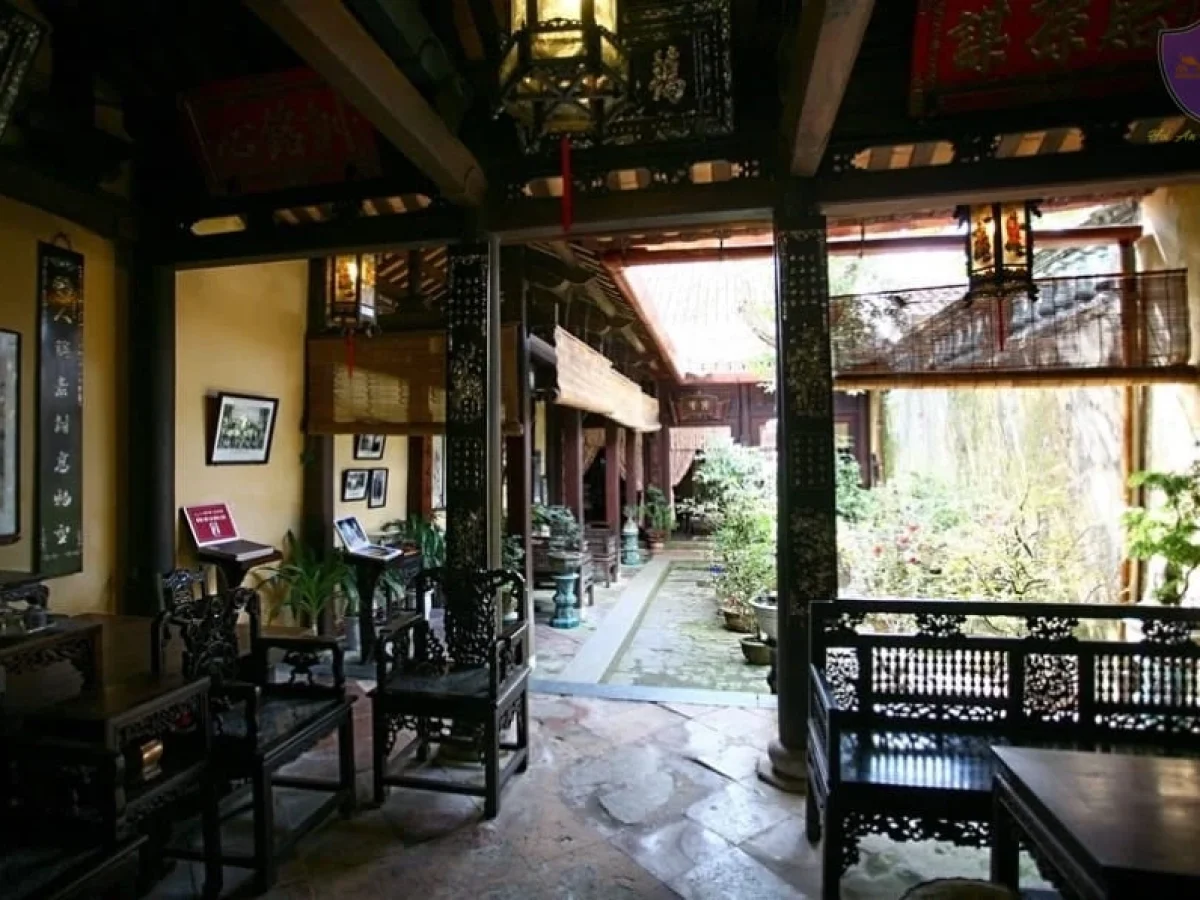
The Climate-Adaptive Tube House Structure in Hoi An Architecture
Most of the historic merchant houses in the ancient town utilize a specific “tube house” layout. Because commercial street frontage was highly taxed and incredibly valuable for attracting foot traffic, the houses are exceptionally narrow at the front. However, they stretch incredibly far back, sometimes spanning the entire length of a city block to connect two parallel streets or to connect a main street directly to the riverbank.
This highly functional, elongated layout is a defining characteristic of Hoi An architecture and is typically divided into three distinct, carefully planned zones:
- The Front Facade (Commercial Space): This area faces the bustling street and was the primary point of sale. Its wide wooden doors consist of multiple removable vertical panels. During the day, they are taken down entirely, opening the shop seamlessly to the street to welcome customers. At night, they are slotted back into their wooden grooves to secure the merchandise.
- The Skylight (The Inner Courtyard): Because the tube houses are built tightly together, sharing solid side walls with their neighbors, there is no possibility for side windows. To combat the resulting darkness and poor air circulation, Hoi An architecture masterfully incorporates an open-air central courtyard. This skylight acts as the vital “lungs” of the house. It draws in brilliant natural light, provides crucial cross-ventilation to cool the deep interior, and features an integrated drainage system that collects monsoon rainwater into large stone basins or channels it away to prevent indoor flooding. The family altar is also typically located near this area, acting as the spiritual heart of the home.
- The Back Facade (Logistics and Storage): The rear of the house typically faced the river, which was the primary highway for moving goods. This area was heavily fortified, built with thick walls, and optimized strictly for logistics—the loading, unloading, and secure storage of heavy cargo directly from merchant boats.
Furthermore, a brilliant adaptation in these Hoi An ancient houses is their flood-survival mechanism. Recognizing that the Thu Bon River reliably breaches its banks every autumn, often submerging the entire ground floor in several feet of muddy water, the builders installed a system of heavy wooden pulleys and a large trapdoor in the ceiling of the ground floor.
When the floodwaters begin to rise, the families use these pulleys to quickly and efficiently hoist their heavy, valuable wooden furniture, heirloom ceramics, and commercial merchandise up through the ceiling and into the safety of the second floor. This ingenious feature of Hoi An architecture ensures that the families can survive the floods with their livelihoods intact.
The Intersection of Three Cultures: A Closer Look at Historic Merchant Houses
It is deep inside these historic merchant houses where the harmonious fusion of Hoi An architecture is most easily spotted by the trained eye. If you stand in the main living area of a home like the Tan Ky House and look up at the exposed wooden truss system supporting the heavy tiled roof, you will witness a physical timeline of history carved into wood.
You might see Japanese-style “crab shell” (chồng rường giả thủ) roof trusses. These are characterized by their curved, overlapping beams designed to flex and absorb kinetic energy rather than break rigidly during an earthquake or a severe typhoon. Incredibly, these Japanese-inspired beams are often placed directly onto a Chinese-style pillar system, utilizing a “crossed swords” motif that wards off evil spirits. These towering pillars often rest on beautifully carved marble bases shaped like blooming lotus flowers—a design choice that is both aesthetically pleasing and highly practical, as the stone prevents moisture from the frequent floods from seeping up into the wood and causing rot.
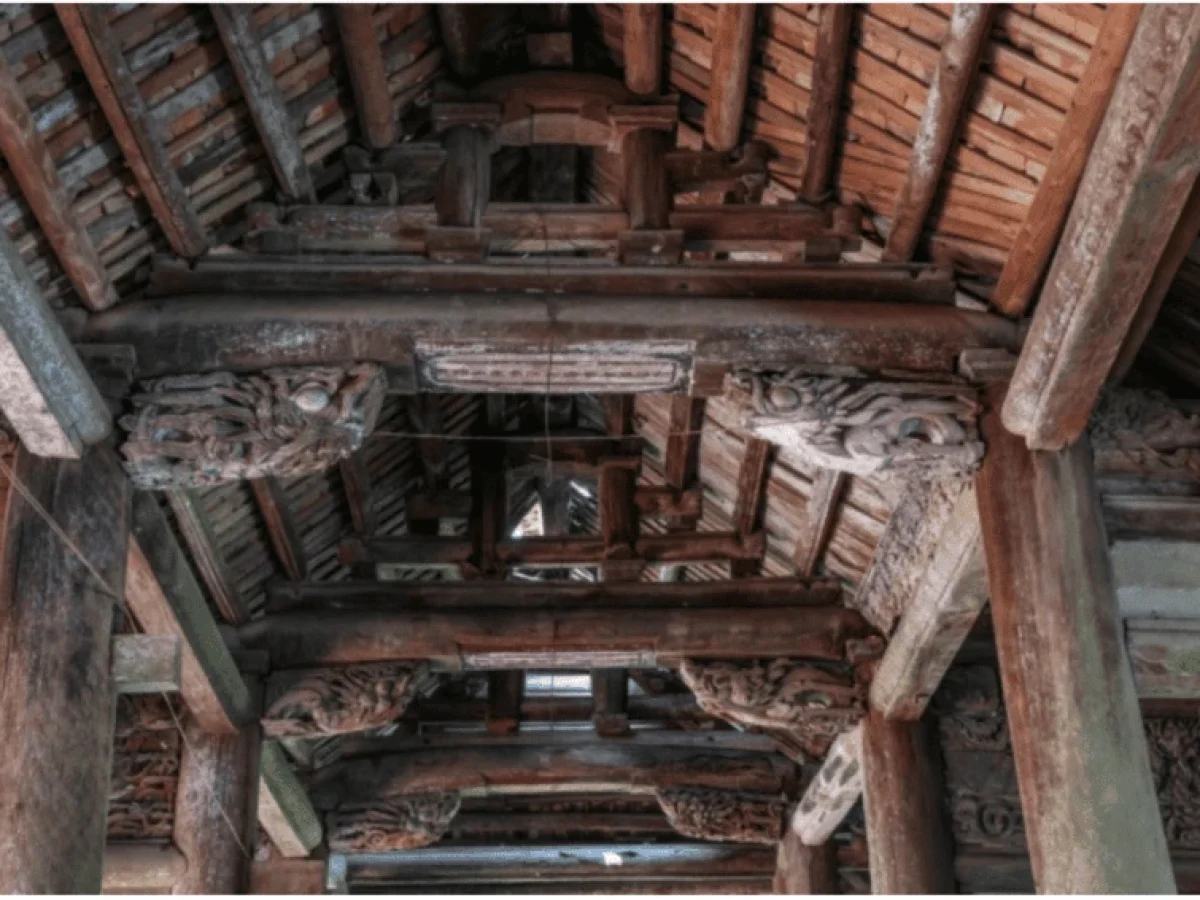
Looking closer at the decorative elements of Hoi An architecture inside these homes, you will find a wealth of cultural symbolism. You will see intricate carvings of bats (a Chinese symbol for happiness and wealth, as the words sound similar in Mandarin), pomegranates (symbolizing fertility and a household full of children), and peach blossoms (representing longevity).
Yet, all of this foreign engineering and imported philosophical symbolism is housed neatly within a deeply functional, highly adapted living floor plan dictated entirely by the practical needs of traditional Vietnamese architecture. It is this seamless, respectful, and highly functional blending that makes Hoi An architecture a subject of endless fascination for architectural historians, preservationists, and casual travelers alike.
Efforts to Preserve Vietnam Cultural Heritage in Hoi An
Today, maintaining the structural integrity and historical authenticity of Hoi An architecture is a monumental, highly expensive, and ongoing task. Because the entire ancient town is heavily protected as a UNESCO World Heritage site, the local government and heritage committees enforce incredibly strict, uncompromising regulations to protect this vital piece of Vietnam cultural heritage.
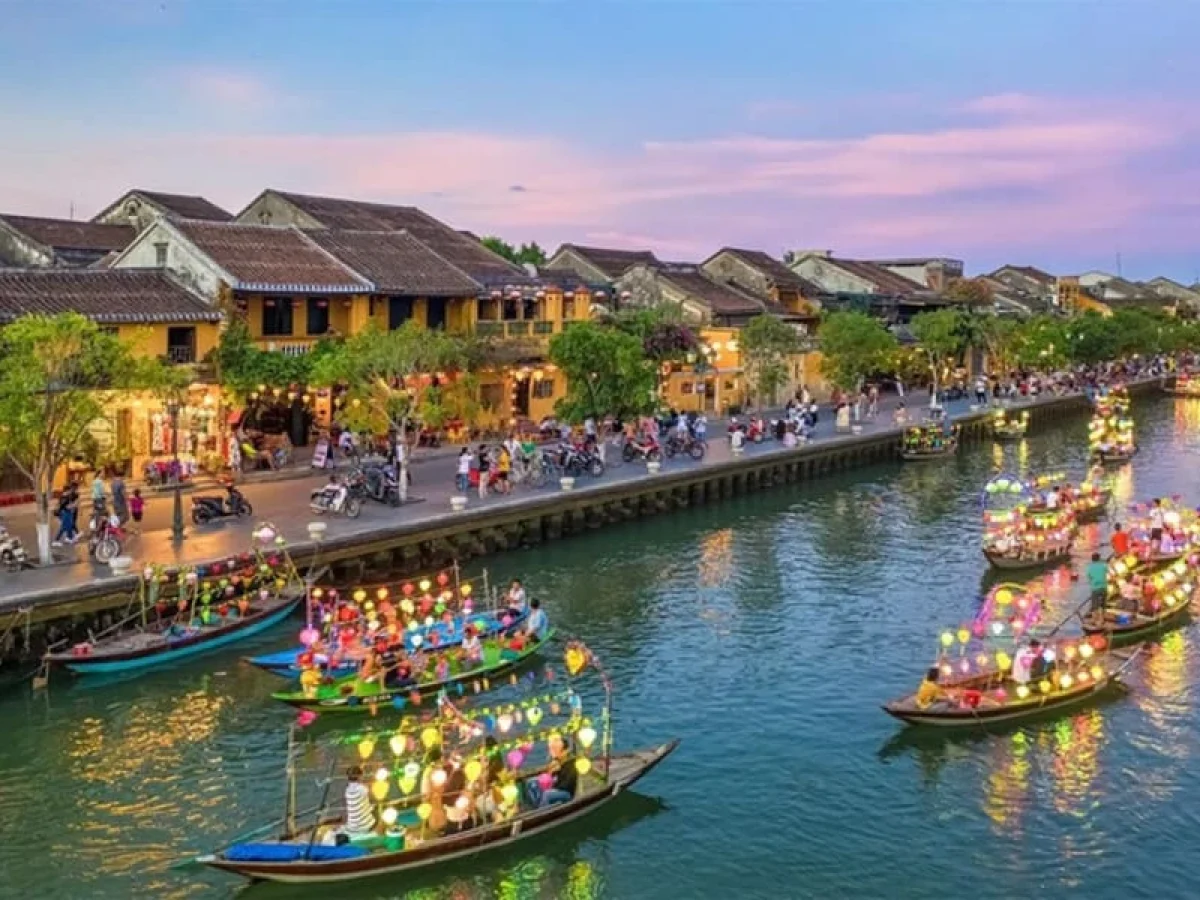
Conservation work on Hoi An ancient houses is tightly controlled and monitored. If the owner of a historic home wishes to repair a leaky roof, reinforce a sagging beam, or even repaint a faded facade, they cannot simply go to a modern hardware store and buy cement or acrylic paint. They are legally mandated to use historically accurate, traditional materials.
This means sourcing specific types of aged, weather-resistant timber, commissioning authentic yin-yang clay tiles fired in traditional local kilns, and mixing the exact shade of natural, lime-based yellow paint. This specific lime wash is crucial because it allows the ancient, porous walls to “breathe” and naturally release trapped moisture, preventing the rapid buildup of destructive mold and mildew in the humid climate.
However, the future of Hoi An architecture is not entirely secure; it faces significant and escalating modern challenges. The very river that brought the town its immense wealth and historical significance—the Thu Bon—now poses its most severe threat. Global climate change and upstream deforestation have led to increasingly severe, unpredictable annual flooding.

While the houses were built to withstand water, the prolonged submersion accelerates the decay of the centuries-old wooden pillars and erodes the mortarless brick walls. If you look closely at the walls inside the historic merchant houses, you can often see high-water marks carved into the wood, documenting floods that reached near the second-story floorboards.
Furthermore, the town faces biological threats like aggressive subterranean termites that feast on the ancient timber frames. On top of environmental factors, the immense, constant pressure of global mass tourism brings heavy, daily foot traffic that slowly wears down the fragile infrastructure, the cobbled streets, and the wooden thresholds of the homes. Balancing the vital economic benefits of the tourism industry with the desperate, urgent need to protect, reinforce, and preserve the delicate physical fabric of Hoi An architecture remains the single greatest challenge for the town’s residents and local custodians. They are fighting a constant battle against time, water, and human impact to ensure this Vietnam cultural heritage survives the 21st century.
Conclusion: Experiencing the Magic of Hoi An Architecture
In summary, the beautiful, enduring story of Hoi An architecture is much more than a tale of old buildings; it is the ultimate story of human connection, boundless economic ambition, and respectful artistic collaboration across borders. The brilliant blending of Japanese structural resilience, Chinese ornate spirituality, and Vietnamese environmental adaptability has created a completely unique, harmonious architectural identity for Central Vietnam—one that absolutely cannot be found anywhere else on earth. The town stands as a physical monument to a time when the world came to Vietnam, and Vietnam welcomed the world, creating something entirely new from the meeting of disparate cultures.
When you have the privilege to visit this remarkable UNESCO World Heritage site, do not just walk rapidly down the crowded streets snapping quick, superficial photos of the picturesque, yellow exteriors. To truly respect, understand, and experience this invaluable piece of Vietnam cultural heritage, you must slow down.
Take the time to step inside the dimly lit, incense-scented historic merchant houses. Run your hand along the smooth, dark wood of a 200-year-old pillar that has survived empires. Look up at the intricate, interlocking wooden truss systems that have stoically withstood centuries of typhoons, devastating floods, and wars without a single iron nail. When you do, you will profoundly realize that Hoi An architecture is not just about static buildings; it is a silent, beautiful, and ongoing conversation between three distinct cultures that has been echoing through time for over four hundred years.

Comment (0)